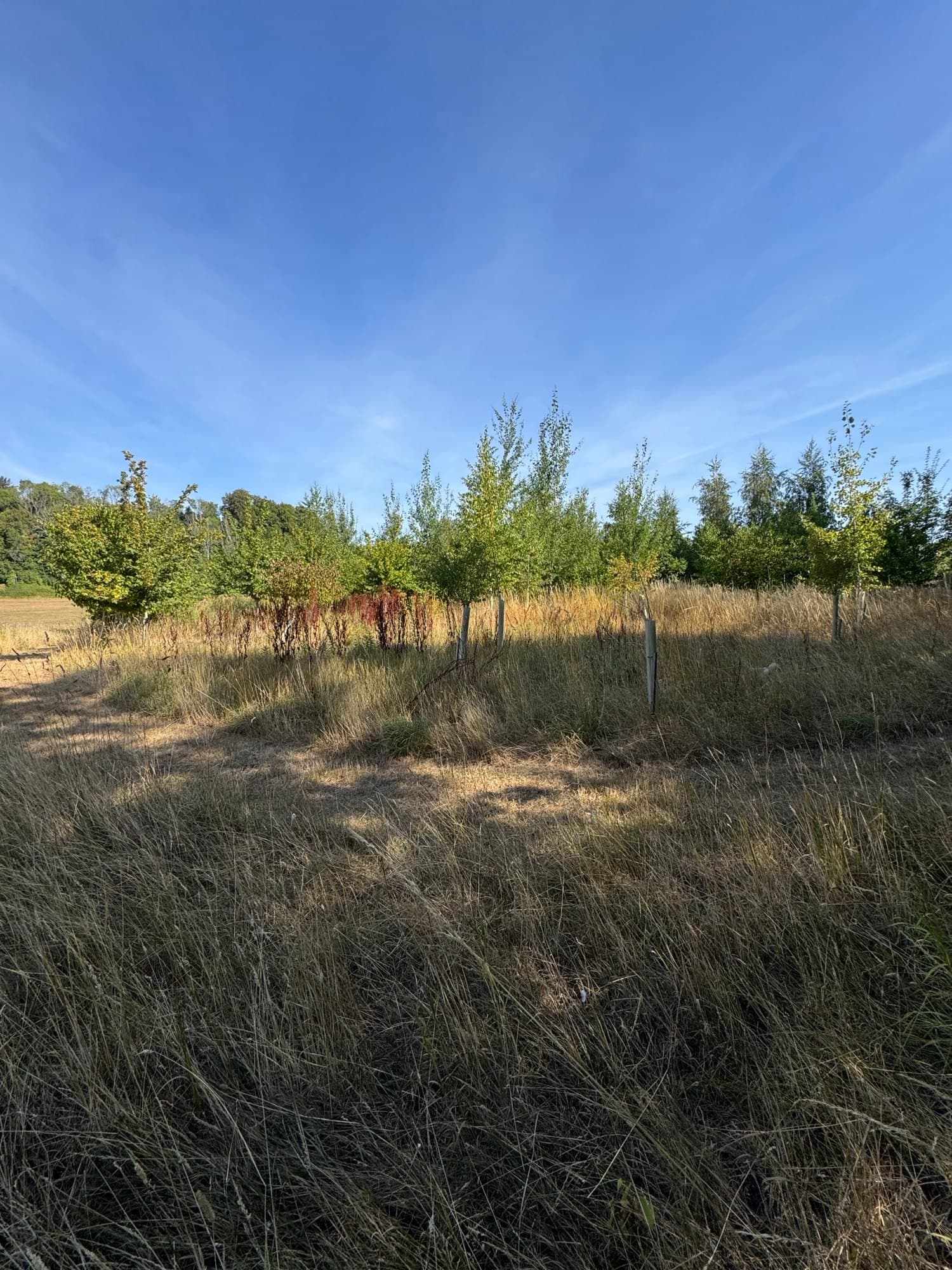
Our East Meon paddock creation and rejuvenation project has reached the stage where the land finally starts to look like paddocks again.
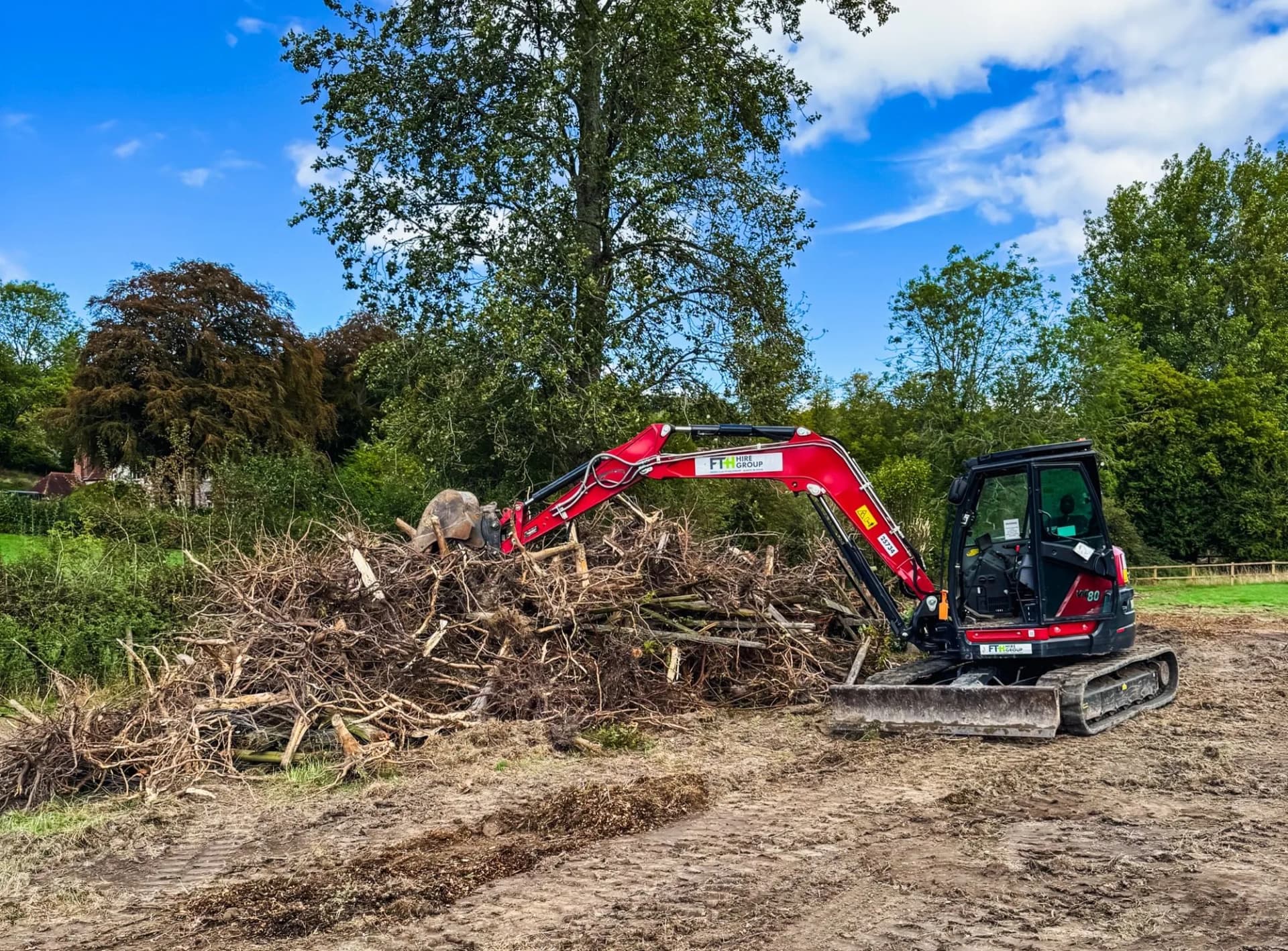
In Part 1 we flailed three acres of overgrown ground and felled more than 300 self-seeded trees. In Part 2 an excavator pulled out the stumps and root systems, the holes were filled and roughly levelled, and the hedges and drainage were dealt with.
With the trees gone, this visit was all about the ground itself: killing off what was left growing in it, cultivating it, and getting grass seed into a proper seedbed.
Stage One: Spraying Off with Glyphosate
After the trees and stumps had been removed, the next step was to spray the whole area with glyphosate.
There were two reasons for this. The cleared ground had developed extensive weed growth, and underneath it there were still root networks from everything that had been removed. We wanted to be certain all of that was dead before continuing, rather than cultivating it and spreading living roots and weeds right through the new seedbed.
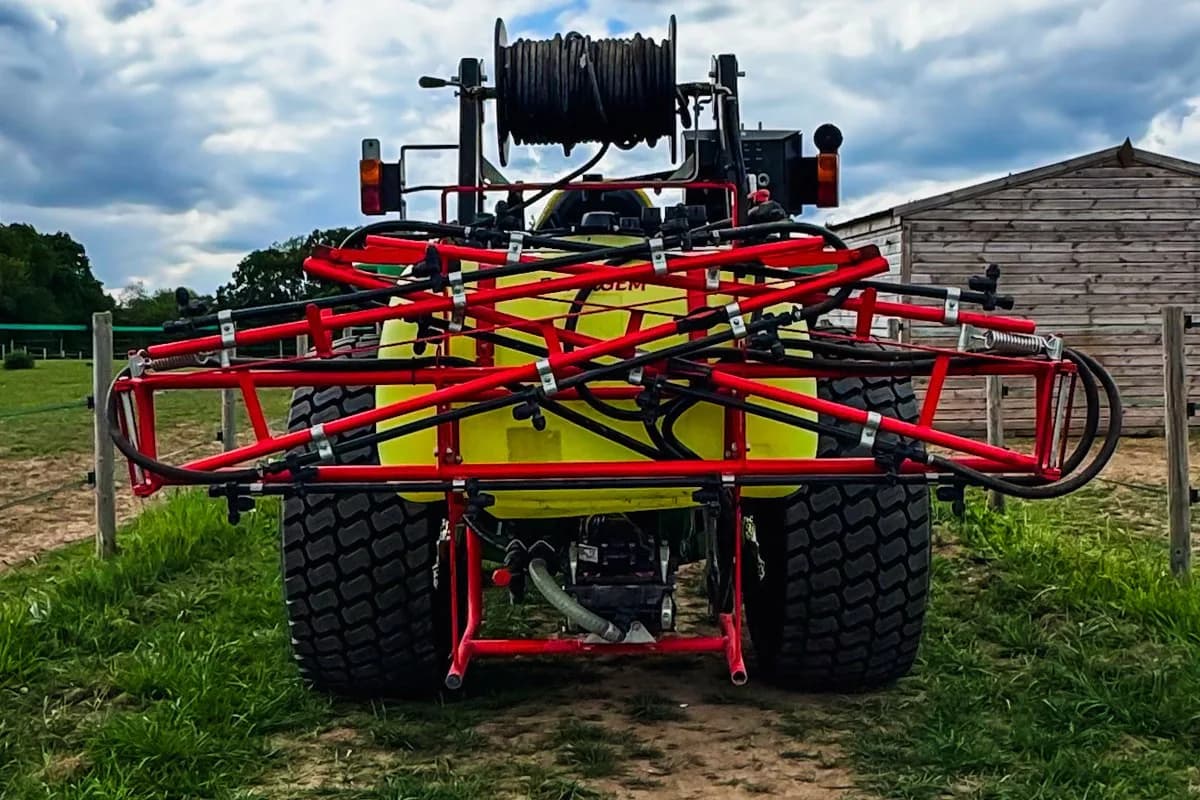
Once the fields had been sprayed we left them for two weeks. Glyphosate works by translocating through the plant down into its roots, and that takes time. Spray and cultivate the same week and you simply chop up plants that are still alive. Give it a fortnight and the whole root system dies with the top growth.
It is a frustrating pause on a project like this, but it is the difference between a clean seedbed and one that is fighting weeds from day one.
Stage Two: Rotavating the Whole Area
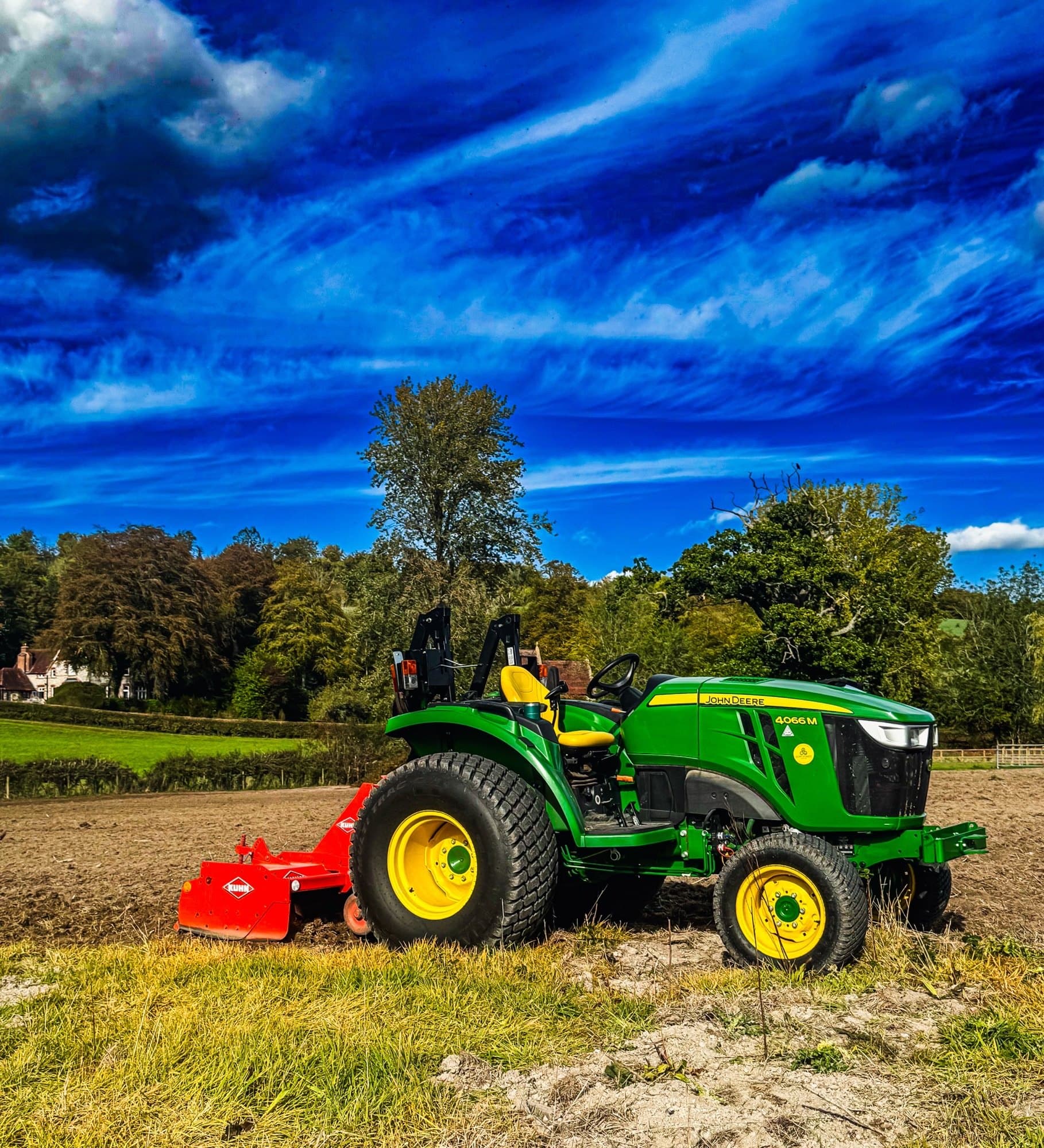
With the spray-off done, the next step was to rotavate the entire area with the John Deere 4066M and Kuhn rotavator.
Rotavating did several jobs at once on this site. It filled in the holes left from the tree and stump removal, it levelled out the humps and bumps that months of clearance work and excavator traffic had left behind, and it broke the surface down into a homogeneous, aerated bed ready for rolling.
On ground that had been scrub and young woodland for years, this was the first time the whole three acres had been worked as one consistent surface. The difference, after everything that had come before, was enormous.
Stage Three: Rolling, Seeding and Rolling Again
A freshly rotavated bed is too loose and fluffy to seed straight into, so the paddock was then rolled with a light roller.
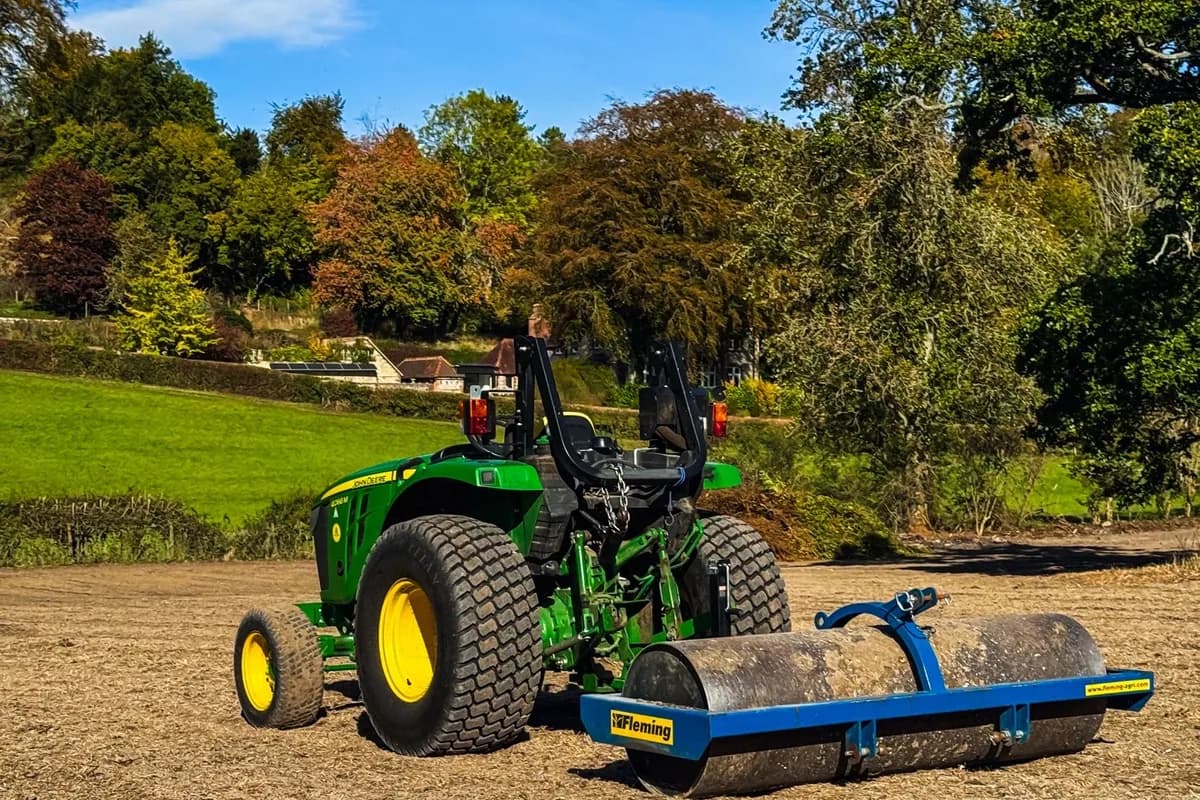
The choice of a light roller is deliberate. The aim is to firm the surface enough for the seeder to work accurately and for seed-to-soil contact, without causing excessive compaction in ground that has only just been opened up. Compaction is one of the main reasons paddocks struggle, and there is no sense in building it into a brand-new one.
We then seeded the area using a dimple seeder at 2.5 g/m². The dimple seeder presses a pattern of small indentations into the firmed surface and drops the seed into them, which gives each seed a sheltered spot with good soil contact.
Finally the whole area was rolled a second time to properly bed the seed in. That second pass closes the dimples over the seed, keeps moisture around it and makes it far harder for birds and weather to shift it.
The Job Is Not Finished When the Seed Goes In
If there is one thing to take from a project like this, it is this: the land must be monitored for weed growth once it has been seeded.
A newly seeded paddock is bare ground with nothing competing on it. Until the grass has established, weeds will proliferate given the slightest chance, and a bed that was perfectly clean after spraying and cultivating can fill with unwanted growth before the sward has closed over.
Keeping an eye on it in the weeks after seeding, and dealing with any weeds early, is what turns a good seedbed into a good paddock.
From Woodland Back to Paddocks
Looking back across the three parts of this project so far, the site has gone from heavily overgrown ground with more than 300 self-seeded trees, through excavating hundreds of stumps and roots, to a sprayed, rotavated, rolled and seeded surface that is ready to grow grass.
The next part is mostly down to the weather and the seed. We will be back to check on establishment and deal with anything that comes up in the meantime.
If you have cleared land, a damaged paddock or ground that needs a full renovation rather than a patch-up, the process is the same: deal with what is already growing, cultivate properly, roll, seed and roll again, and then watch it. We carry out paddock renovation like this across Hampshire and the surrounding counties.