Renovating a horse paddock is an investment in the future health and productivity of your grassland. But one of the biggest challenges when establishing a new grass sward is preventing weeds from taking over before the grass has had a chance to establish.
One of the most effective ways to tackle this problem is a technique known as the stale seedbed.
It’s a relatively simple process that can significantly reduce weed competition during the critical early stages of grass establishment. Yet it’s something that’s frequently overlooked when renovating paddocks.
In this article, we’ll explain what a stale seedbed is, how it works, and how you can incorporate it into a paddock renovation programme.
What Is a Stale Seedbed?
A stale seedbed is a method of preparing soil for sowing that deliberately encourages weed seeds to germinate before the desired grass seed is planted.
Rather than cultivating a paddock and immediately sowing grass seed, the prepared soil is left undisturbed for a period of time.
During this period, weed seeds already present in the soil begin to germinate. These newly emerged weeds are then destroyed before the grass seed is sown.
The result is a seedbed with fewer actively growing weeds competing against your new grass.
The principle is straightforward: encourage as many weeds as practical to emerge before sowing, rather than allowing them to emerge alongside your expensive grass seed.
Why Are Weeds Such a Problem in Newly Renovated Paddocks?
When an established paddock is renovated, particularly where operations involve subsoiling, rotavating, or other forms of cultivation, the soil is disturbed.
This disturbance can bring previously buried weed seeds closer to the surface, where they receive the light, moisture and temperature conditions needed for germination.
Many weed seeds can remain viable in the soil for years, and some species can persist for decades.
Consequently, even a paddock that appeared relatively weed-free before renovation can experience a substantial flush of weeds afterwards.
Common examples include:
- Docks: Deep-rooted perennial weeds that can also establish rapidly from seed.
- Thistles: Some species spread readily through windborne seeds and compete with developing grass.
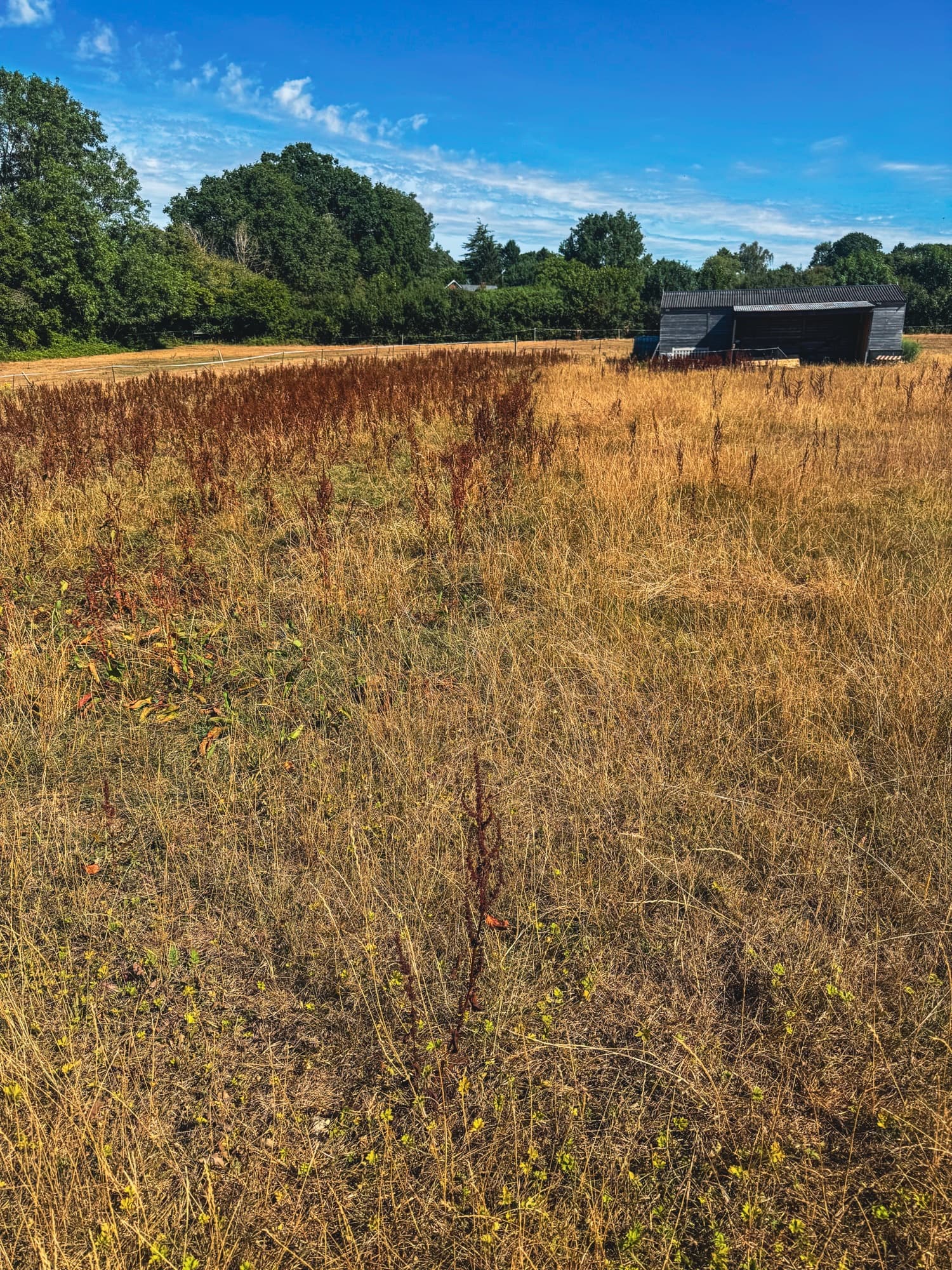
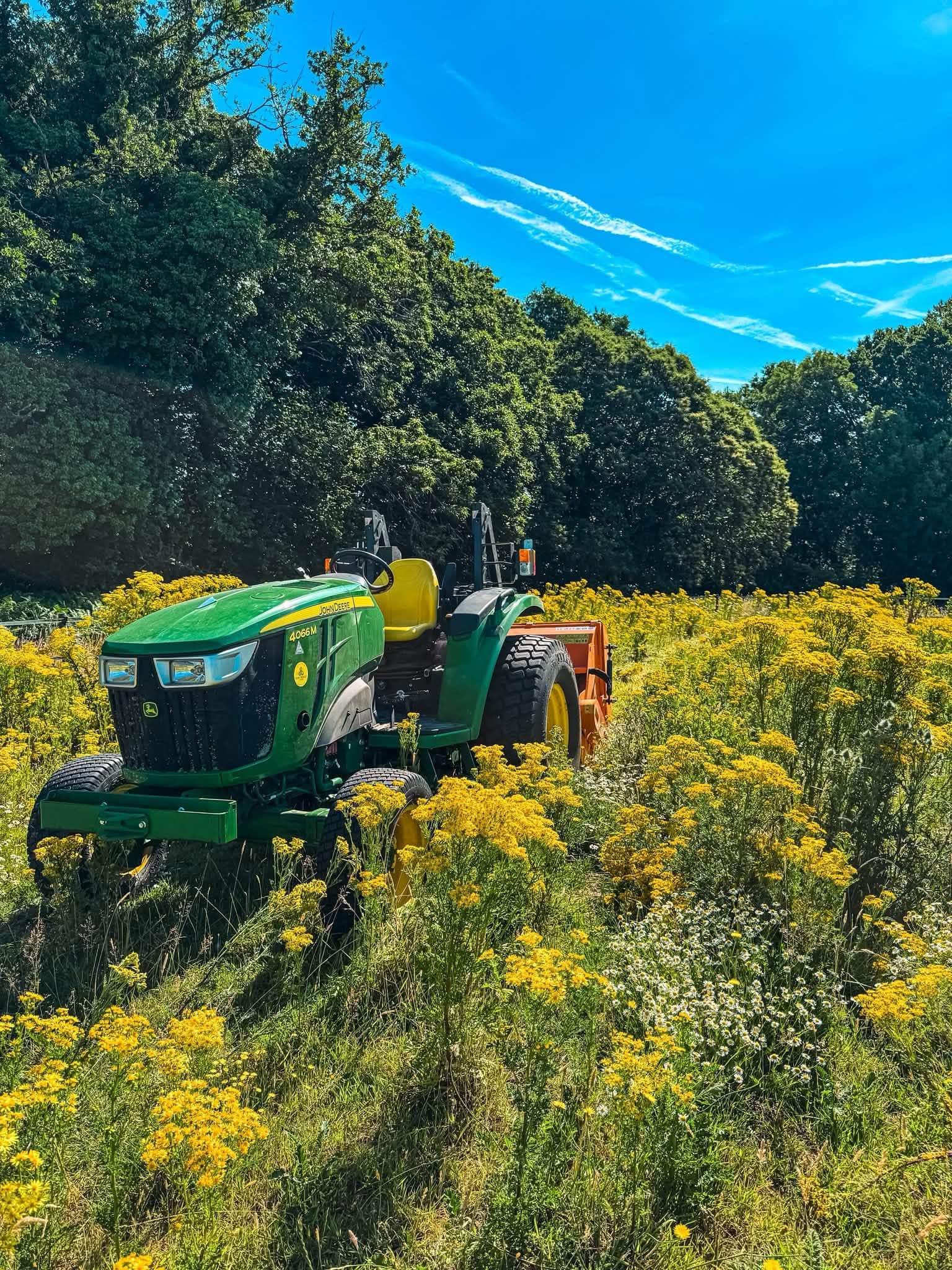
- Ragwort: Particularly concerning in horse paddocks because of its toxicity to horses.
- Chickweed: A fast-growing weed capable of spreading across newly prepared ground.
- Fat hen: An annual weed that can grow vigorously in fertile, disturbed soil.
- Annual meadow grass: A prolific seed producer that can compete with desirable pasture grasses.
The problem is particularly acute during the first few weeks after sowing.
Newly germinated grass plants have small root systems and limited leaf area. Fast-growing weeds can quickly shade them, compete for nutrients and moisture, and prevent the grass from establishing a dense, productive sward.
Once weeds become established, controlling them without damaging young grass can become much more difficult.
This is where the stale seedbed technique offers a significant advantage.
How to Create a Stale Seedbed in a Horse Paddock
The process fits naturally into a comprehensive paddock renovation programme.
Step 1: Remove Existing Vegetation
Before preparing the seedbed, the existing vegetation needs to be dealt with.
Where a paddock is heavily infested with weeds or poor-quality grass, this may involve applying an appropriate non-selective herbicide, such as an authorised glyphosate product, to actively growing vegetation.
This helps eliminate existing plants before cultivation begins.
It’s important to understand that glyphosate controls susceptible growing plants but does not provide residual weed control in the soil.
It therefore won’t prevent new weeds from germinating after cultivation.
Where herbicides are used, always follow the specific product label, including application conditions, grazing restrictions and intervals before cultivation or sowing.
Step 2: Address Soil Compaction
Many horse paddocks suffer from substantial soil compaction caused by repeated hoof traffic, particularly during wet conditions.
Compaction restricts root development, reduces water infiltration and limits the availability of oxygen within the soil.
If significant compaction is present, it should be addressed before preparing the final seedbed.
Depending on the soil conditions, this might involve subsoiling or another appropriate form of mechanical loosening.
However, soil moisture is critical.
Attempting to relieve compaction when the ground is too wet can smear the soil and create further damage rather than improving its structure.
The aim is to establish a suitable rooting environment for the new grass, not simply to loosen the top few centimetres.
Step 3: Cultivate and Prepare the Seedbed
Once the ground is suitable, the paddock can be cultivated.
For a full renovation, this might involve rotavating the soil to break up existing vegetation and create a workable seedbed.
The ground should then be levelled and, where necessary, consolidated to create a firm, reasonably fine surface.
At this stage, the temptation is to immediately sow the grass seed.
For a stale seedbed, however, we deliberately delay sowing.
The prepared soil is left to allow the first flush of weed seedlings to emerge.
Step 4: Allow the Weed Seeds to Germinate
This is the most important part of the process.
Once the seedbed has been prepared, leave it undisturbed for approximately 2–4 weeks, depending on soil temperature, moisture and the time of year.
During this period, weed seeds near the soil surface begin to germinate.
Warm, moist conditions are generally ideal.
In spring and early autumn, when soil temperatures are favourable, substantial weed germination may occur within a couple of weeks.
In colder or particularly dry conditions, germination can be much slower.
The objective is to encourage a visible flush of weeds before proceeding.
If conditions permit and sufficient time is available, allowing a second flush of weeds to germinate and then destroying it can further reduce weed pressure.
However, every additional delay must be balanced against the remaining grass establishment window.
Step 5: Destroy the Newly Germinated Weeds
Once a reasonable number of weeds have emerged, the next step is to eliminate them without unnecessarily disturbing the soil.
There are two main approaches.
Option 1: Chemical control
An appropriately authorised non-selective herbicide can be applied to the actively growing weed seedlings.
This can be particularly useful because it avoids further soil cultivation.
The weeds are controlled while the seedbed remains largely intact, reducing the number of additional weed seeds brought to the surface.
Product label instructions must be followed, including any required interval before sowing.
Option 2: Mechanical control
Where herbicide use isn’t desirable, shallow mechanical cultivation can be used to destroy the young weeds.
The key is to disturb only the uppermost soil layer.
Deep cultivation at this stage can bring another population of dormant weed seeds towards the surface, undermining some of the benefits of creating the stale seedbed.
Very shallow hoeing or harrowing in suitable dry conditions may be sufficient.
Mechanical control can be less reliable in wet weather or against weeds capable of rerooting.
Step 6: Sow the Grass Seed
Once the weeds have been controlled and any necessary product-label intervals have passed, the grass seed can be sown.
Ideally, this should involve minimal further disturbance of the soil.
A suitable direct-drill or overseeding machine can be particularly useful because it places seed into the prepared surface without extensively cultivating the ground again.
This helps preserve the benefits of the stale seedbed.
For most pasture grass mixtures, the objective is to place the seed relatively shallowly, commonly around 5–10 mm, although the precise depth depends on the mixture and soil conditions.
Good seed-to-soil contact is essential.
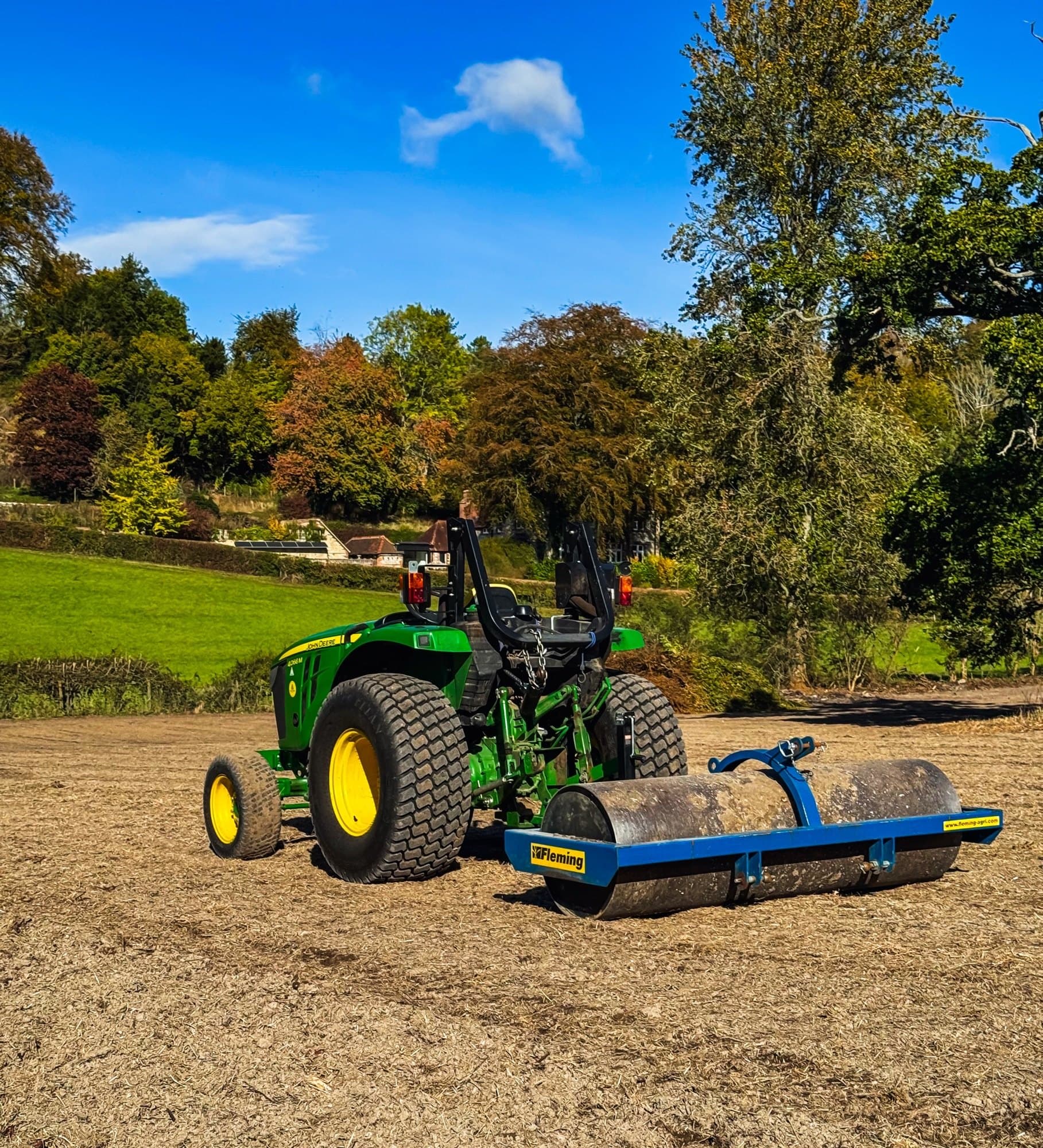
Rolling may be beneficial where appropriate, particularly on lighter or loose soils, but care should be taken to avoid working or compacting wet ground.
Why Does the Stale Seedbed Work?
The effectiveness of the technique comes from understanding how weed seeds behave in the soil.
Most agricultural soils contain what is known as a weed seed bank.
This is a reservoir of viable seeds deposited over many years.
Some seeds germinate immediately when conditions are suitable, while others remain dormant until environmental conditions trigger germination.
Cultivation can stimulate germination by exposing buried seeds to light, changing their depth and creating favourable growing conditions.
By preparing the seedbed and then waiting, we encourage a proportion of those seeds to germinate before introducing the grass.
Destroying the emerging weeds reduces the number of plants competing with the grass during establishment.
Importantly, the technique doesn’t eliminate every weed seed in the soil.
Further germination can still occur after sowing, particularly following rainfall or changes in soil temperature.
However, reducing the initial flush of weeds can give young grass a considerable competitive advantage.
How Much Difference Can a Stale Seedbed Make?
The benefit depends heavily on the weed species present, the number of viable seeds in the soil, the weather and the quality of the subsequent weed control.
In paddocks with substantial populations of annual weeds, the improvement can be significant.
Where weeds have been allowed to seed repeatedly over several years, a stale seedbed can be particularly valuable.
However, it’s important to recognise its limitations.
Deep-rooted perennial weeds, including established docks and creeping thistles, may regenerate from surviving roots or underground structures.
A stale seedbed is primarily a technique for reducing weeds emerging from seed. It isn’t a substitute for properly controlling established perennial weeds before renovation.
Timing: When Should You Use a Stale Seedbed?
In the UK, spring and late summer to early autumn are generally the most practical periods for establishing new pasture.
These periods often provide suitable soil temperatures and moisture for grass germination.
They can also provide good conditions for weed emergence.
The challenge is allowing sufficient time for the stale seedbed process without missing the optimal sowing window.
For example, an early autumn renovation might follow this programme:
Period
Operation
Week 1
Control existing vegetation and carry out suitable soil preparation
Weeks 2–3
Allow weed seedlings to emerge
Week 4
Destroy emerged weeds with minimal soil disturbance
Week 5
Sow grass seed, subject to conditions and product-label intervals
Weeks 6–10
Monitor grass establishment and weed competition
This is an illustrative programme rather than a fixed timetable. Herbicide activity, weather, soil condition and weed emergence can all change the schedule.
Late-season renovations require particular care. Delaying sowing too long can leave insufficient warmth and growing time for grass to establish before winter.
In some situations, it may be better to sow promptly rather than sacrifice the establishment window for another flush of weeds.
The Importance of Grass Establishment After Sowing
Creating a stale seedbed is only one part of successful paddock renovation.
Once the grass has been sown, the objective is to encourage rapid establishment and development of a dense, healthy sward.
This involves several important considerations.
Choose the right grass mixture. Horse paddocks require mixtures suited to their intended use, whether that involves intensive grazing, hay production or general turnout.
Correct soil fertility and pH. Soil testing should guide lime and fertiliser applications. Applying nutrients without understanding existing soil conditions can encourage unnecessary growth or create imbalances.
Avoid excessive nitrogen. Large amounts of readily available nitrogen can encourage vigorous weed growth alongside the grass, particularly where substantial weed populations remain.
Protect the new grass from grazing. Horses can cause considerable damage to young grass plants through close grazing and hoof traffic.
A paddock may look green and established long before its root system is capable of tolerating grazing.
For a fully renovated paddock, an initial exclusion period of around 12 weeks may be a useful planning allowance, but actual readiness should be determined by root establishment, soil conditions, sward density and the ability of plants to resist being pulled out.
Monitor emerging weeds. Even after a successful stale seedbed, further weeds may appear. Early identification allows an appropriate management strategy before they become dominant.
Can You Use a Stale Seedbed When Overseeding?
This is an important distinction.
A traditional stale seedbed is generally associated with full cultivation, where the existing vegetation has been removed and bare soil is prepared for sowing.
Overseeding an established paddock is different.
The existing grass remains in place, and the objective is to introduce new seed into the existing sward with minimal disturbance.
Where a paddock still has a reasonable grass population, full cultivation solely to create a stale seedbed may be unnecessary and counterproductive.
Maintaining existing grass cover helps suppress weeds by occupying space and competing for resources.
For these paddocks, improving soil conditions, managing existing weeds, controlling grass height and achieving good seed-to-soil contact may be more effective than starting again.
However, where a paddock is so badly damaged that little useful grass remains, a full renovation incorporating a stale seedbed may be the better long-term solution.
Is a Stale Seedbed Worth the Extra Time?
For paddocks with a history of heavy weed growth, the answer is often yes.
The main disadvantage is the additional time required before sowing.
Depending on conditions, the process can add several weeks to a renovation programme.
However, that delay needs to be considered against the potential problems caused by severe weed competition after sowing.
Once a new grass sward has been established, controlling weeds can be more complicated because many selective herbicides have restrictions on use in newly sown grass.
A successful stale seedbed can reduce the need for remedial weed control during this vulnerable period.
It may also improve the uniformity of the resulting grass cover and reduce the likelihood of bare patches becoming dominated by weeds.
Our Approach to Paddock Renovation
At Emmerdale Agriculture, we believe successful paddock renovation starts beneath the surface.
There’s little benefit in establishing an attractive new grass sward if underlying soil compaction, poor drainage or nutrient imbalances remain unresolved.
Our approach focuses on addressing the causes of poor grass performance before establishing new pasture.
Depending on the condition of the paddock, this can involve:
- Soil assessment and identifying compaction problems.
- Appropriate subsoiling or soil loosening.
- Control of existing weeds and unwanted vegetation.
- Cultivation, levelling and seedbed preparation.
- Incorporating a stale seedbed period where conditions and timing justify it.
- Grass reseeding or overseeding.
- Rolling and subsequent establishment management.
The objective isn’t simply to make a paddock green again.
It’s to create a productive, resilient grass sward capable of supporting horses while reducing the conditions that allow weeds to dominate.
Final Thoughts
A stale seedbed is one of the simplest techniques available for reducing weed competition during paddock renovation.
By deliberately encouraging weed seeds to germinate before sowing, and then destroying those seedlings, we can give new grass a better opportunity to establish.
It’s not a complete solution to every weed problem, and it won’t replace good soil management or effective control of established perennial weeds.
But where a paddock is being fully renovated, particularly one with a history of heavy weed infestation, it’s a technique well worth considering.
Sometimes the best way to grow better grass is to grow the weeds first — and get rid of them before the grass goes in.