We see it time and time again.
A paddock has become badly rutted, poached or uneven, so somebody is brought in to “sort it out”. The ground is rotavated, levelled and reseeded and, initially, everything looks fantastic.
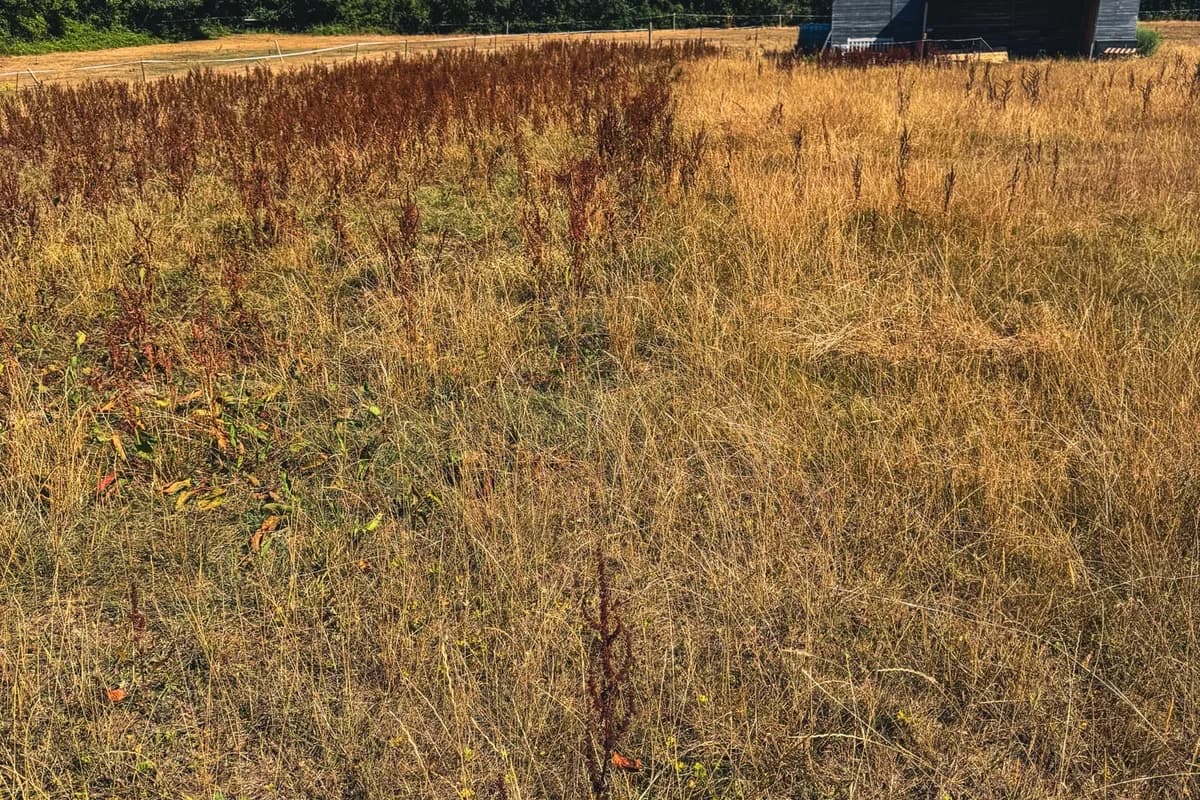
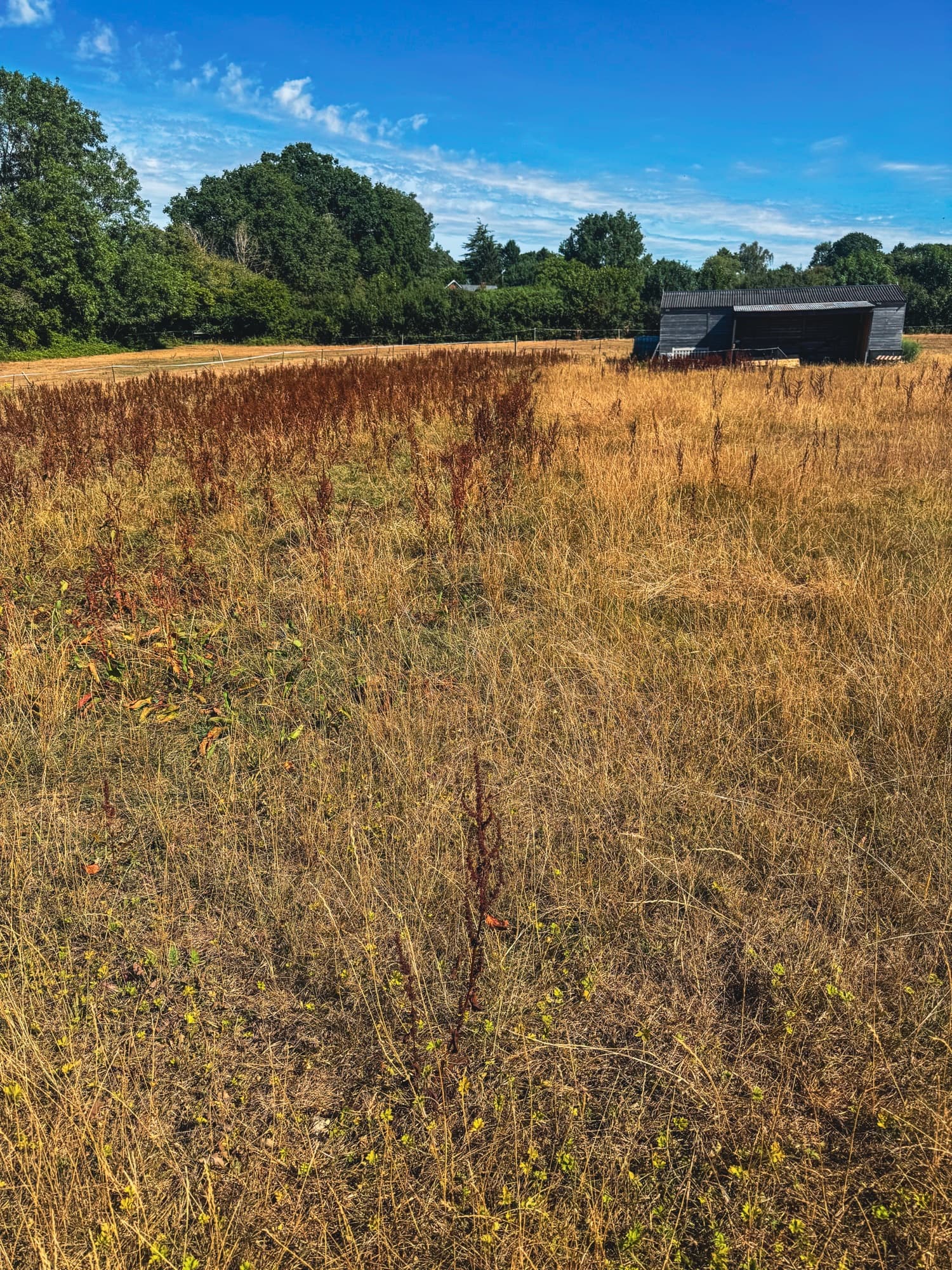
Then a few weeks later, the entire paddock erupts in weeds.
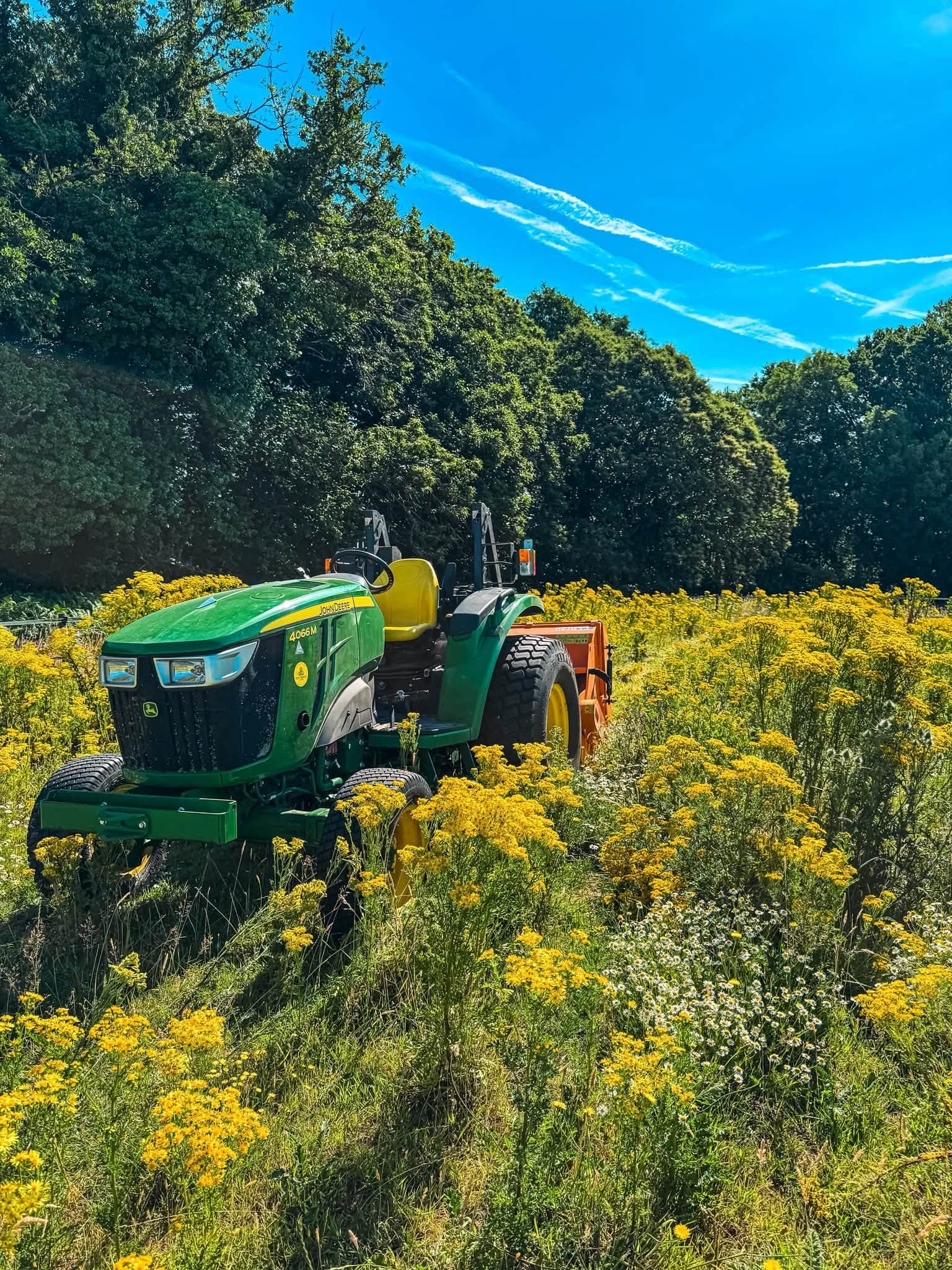
Docks. Thistles. Chickweed. Ragwort. Fat hen. Knotweed and countless other unwanted plants suddenly appear across what was supposed to be a newly renovated paddock.
Unfortunately, this isn't necessarily bad luck.
It can be the predictable result of disturbing the soil without having a proper establishment and aftercare programme in place.
Rotavating Is Only the Beginning
One of the biggest misconceptions surrounding paddock renovation is that rotavating, levelling and putting some grass seed down constitutes a complete renovation.
It doesn't.
Cultivating the soil is actually the point at which one of the most vulnerable stages of the renovation begins.
Soil contains an enormous reserve of dormant weed seeds – commonly referred to as the weed seed bank.
Some of those seeds may have been sitting dormant beneath an established grass sward for years.
Once the ground is cultivated, those seeds can be brought into conditions where they have everything they need to germinate: light, moisture, warmth and exposed soil.
AHDB specifically warns that soil cultivation can disturb the weed seed bank and recommends regularly checking newly established grass leys for weed infestations. Docks are a particularly good example: dock seeds can remain viable in soil for many years and can germinate rapidly following soil disturbance.
That means the same operation intended to renovate the paddock can also create ideal conditions for weeds.
Think of Grass as the Paddock's Immune System
One of the easiest ways of explaining this to customers is to think of an established grass sward as the paddock's immune system.
It isn't literally an immune system, of course, but the analogy is useful.
A healthy, dense grass sward occupies space, intercepts sunlight and competes for water and nutrients.
There simply isn't as much opportunity for weeds to establish.
When that grass is destroyed through cultivation, this natural competition temporarily disappears.
You've effectively created acres of bare soil.
The grass seed you have planted now has to race against potentially thousands or millions of naturally occurring weed seeds already present in the soil.
And unfortunately, many weeds are extremely good at winning that race.
AHDB notes that a dense established perennial ryegrass sward can contain around 5,000–7,000 tillers per square metre, helping create dense ground cover and reducing the space available for weed infestation.
The Job Isn't Finished When the Seed Goes Down
This is where many paddock renovations go wrong.
The contractor finishes:
Rotavate.
Level.
Seed.
Roll.
Job done.
Except it isn't.
The weeks immediately following establishment are some of the most important weeks of the entire renovation.
The field needs to be regularly inspected.
Walking a newly seeded paddock allows emerging weed problems to be identified while they are still a handful of plants rather than thousands.
Small, isolated weeds can often be physically removed before they establish or produce seed. Other problems may require mowing, topping or, where appropriate, carefully selected chemical control.
The crucial point is:
Do something while the problem is small.
Twenty docks pulled from a newly seeded paddock are a minor inconvenience.
Thousands of mature docks spread across several acres are an expensive weed-control programme.
Can You Spray Weeds in Newly Seeded Grass?
This is an area where there is considerable misunderstanding.
You cannot simply assume that a normal paddock herbicide can safely be applied immediately after germination. Young grass is vulnerable and herbicide labels contain specific restrictions regarding newly established swards.
However, it is also incorrect to say that newly seeded grass can never be sprayed.
AHDB guidance states that weeds in new grass leys are often best controlled when the grass has reached approximately the two-to-three-leaf stage. The appropriate timing depends upon the weed, grass mixture and, critically, the herbicide being used.
Always follow the current UK product label and, where necessary, obtain professional advice before treating a newly established sward.
For horse paddocks there is another important consideration: the product must also be appropriate for the intended grazing situation and all grazing restrictions on the label must be observed.
The answer therefore isn't simply:
"We can't spray it because the grass is young."
It is:
"We need to identify the weeds, establish the growth stage of the new grass and determine whether an appropriate authorised treatment is available."
Prevention Actually Starts Before You Rotavate
Good weed management should ideally begin before the cultivator ever enters the field.
If an existing paddock contains significant perennial weeds, simply rotavating everything can make the subsequent establishment considerably more difficult.
Depending upon the circumstances, a pre-cultivation treatment may be appropriate.
AHDB reports that pre-cultivation herbicide treatment can remove existing vegetation and weeds before reseeding, reducing competition with the developing grass. It also notes that cultivation itself can disturb buried weed seeds, so pre-treatment does not eliminate the need for monitoring afterwards.
Another useful technique in suitable situations is a stale seedbed.
Instead of immediately sowing the final grass crop after cultivation, the seedbed is prepared and some of the weed seed present near the surface is encouraged to germinate. That first flush can then be controlled before the final grass is established.
The objective is simple:
Reduce the weed pressure before asking young grass seedlings to compete with it.
Grass Establishment Matters Just as Much as Weed Control
Controlling weeds is only half of the equation.
You also need the grass to establish quickly enough to occupy the available ground.
Seedbed preparation, soil moisture, fertility, pH, sowing depth and consolidation all influence establishment.
AHDB recommends grass seed generally being established approximately 1–2 cm below the surface, with smaller seeds such as clover shallower still. Proper consolidation after drilling or broadcasting is also extremely important because good seed-to-soil contact helps establishment and reduces moisture loss.
Soil conditions matter too. Reseeding into dry ground simply because the machinery is available can leave grass struggling to germinate while better-adapted weeds take advantage of the opportunity.
The objective isn't merely to germinate grass.
It's to establish a dense, competitive sward as quickly as conditions reasonably allow.
What If the Weeds Have Already Taken Over?
This is where the economics can change dramatically.
If there are a few weeds scattered around a newly established paddock, destroying everything and starting again would clearly be excessive.
Those weeds may be manageable through hand removal, appropriate selective herbicide treatment, cutting or other targeted control.
But there comes a point where the density of weeds is so severe that attempting to rescue the grass underneath them becomes uneconomical or impractical.
At that stage, a complete reset may be the better option.
Depending upon the weeds present and the site, a typical full-renovation programme may involve:
- Identify exactly what weeds are present.
- Control the existing vegetation, potentially using an appropriately authorised glyphosate product where suitable and following the product label.
- Allow sufficient time for the treatment to work, particularly where established perennial weeds are present.
- Remove or manage the dead vegetation. On heavily contaminated horse paddocks, flail collecting can be particularly useful because it removes large quantities of dead vegetation rather than leaving a heavy layer of material across the seedbed.
- Correct underlying problems. Compaction, drainage, pH and nutrient deficiencies should be addressed where necessary. Otherwise you're renovating the symptoms without addressing why the paddock deteriorated in the first place.
- Cultivate and level the ground appropriately.
- Consolidate the seedbed.
- Sow an appropriate grass mixture at the correct depth and rate.
- Roll again to maximise seed-to-soil contact.
- Monitor the field continuously during establishment.
That final step is every bit as important as the machinery work.
Don't Spend Thousands Renovating a Paddock and Then Walk Away
A full paddock renovation isn't simply a mechanical operation.
You can use the best tractors, cultivators, rollers and seeders available and still end up with a poor result if nobody manages what happens afterwards.
Cultivation creates an opportunity for your new grass.
But it can create exactly the same opportunity for weeds.
The difference between a dense new grass sward and an acre of docks, thistles and chickweed can come down to what happens during the weeks following reseeding.
Prepare it properly.
Seed it properly.
Monitor it regularly.
Deal with weeds early.
Because spending a few minutes pulling or controlling weeds during establishment is considerably cheaper than having to renovate the entire paddock for a second time.