Our East Meon paddock creation and rejuvenation project has moved into its next major phase.
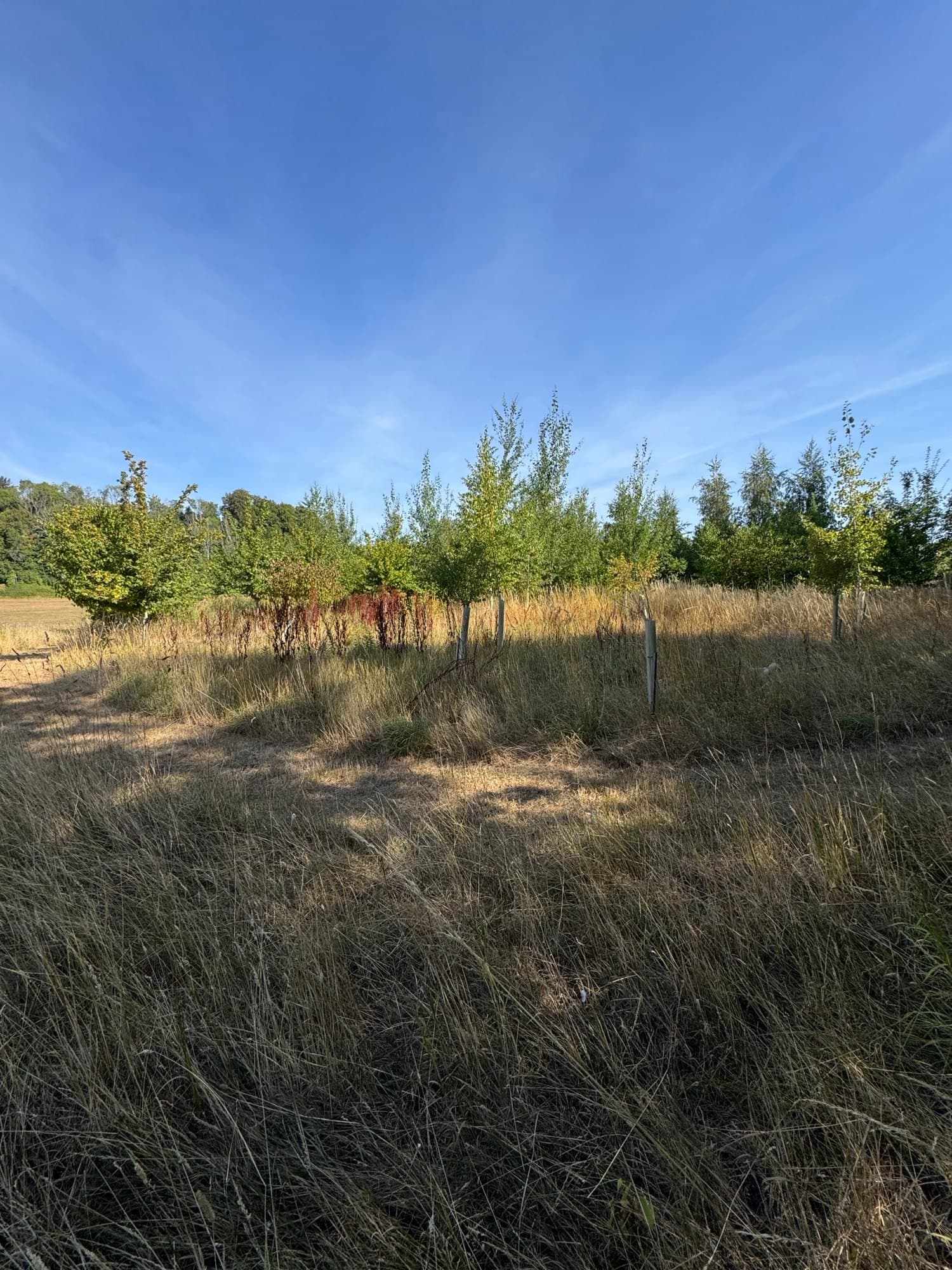
When we last visited the site, we tackled the initial clearance of what had become heavily overgrown paddocks. The fields were flailed, more than 300 saplings and small trees were cut down, and the resulting timber and branches were processed through a wood chipper.
With the bulk of the above-ground vegetation removed, we returned this week with heavier machinery to start dealing with what remained below ground and to reshape several areas of the site ready for its eventual transformation into usable horse paddocks.
The Next Stage of the Project
There were several major jobs to complete during this visit.
The client wanted a substantial section of hedge removed which partially divided roughly a third of the field. At approximately 30 feet tall, this was considerably more than a normal hedge-cutting job.
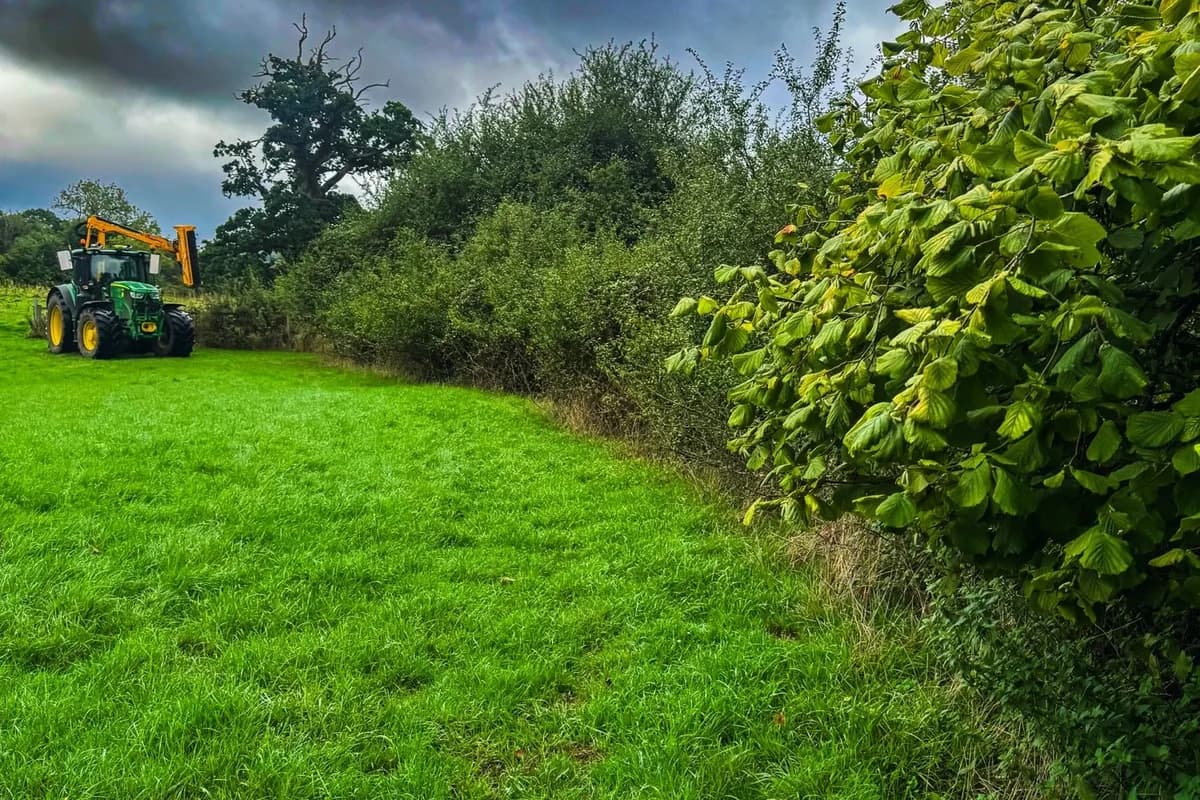
Drainage also needed to be improved in this section of the field. The plan was to create a ditch along the lower ground to collect surface water and direct it towards a nearby stream.
We then needed to uproot the stumps and root systems left behind from the approximately 300 trees removed during our previous visit, fill and level the resulting holes, and clear another large section of hedge along the client's upper boundary.
This required considerably heavier equipment than the first stage of the project.
Stage 1 – Removing Trees, Stumps and Roots
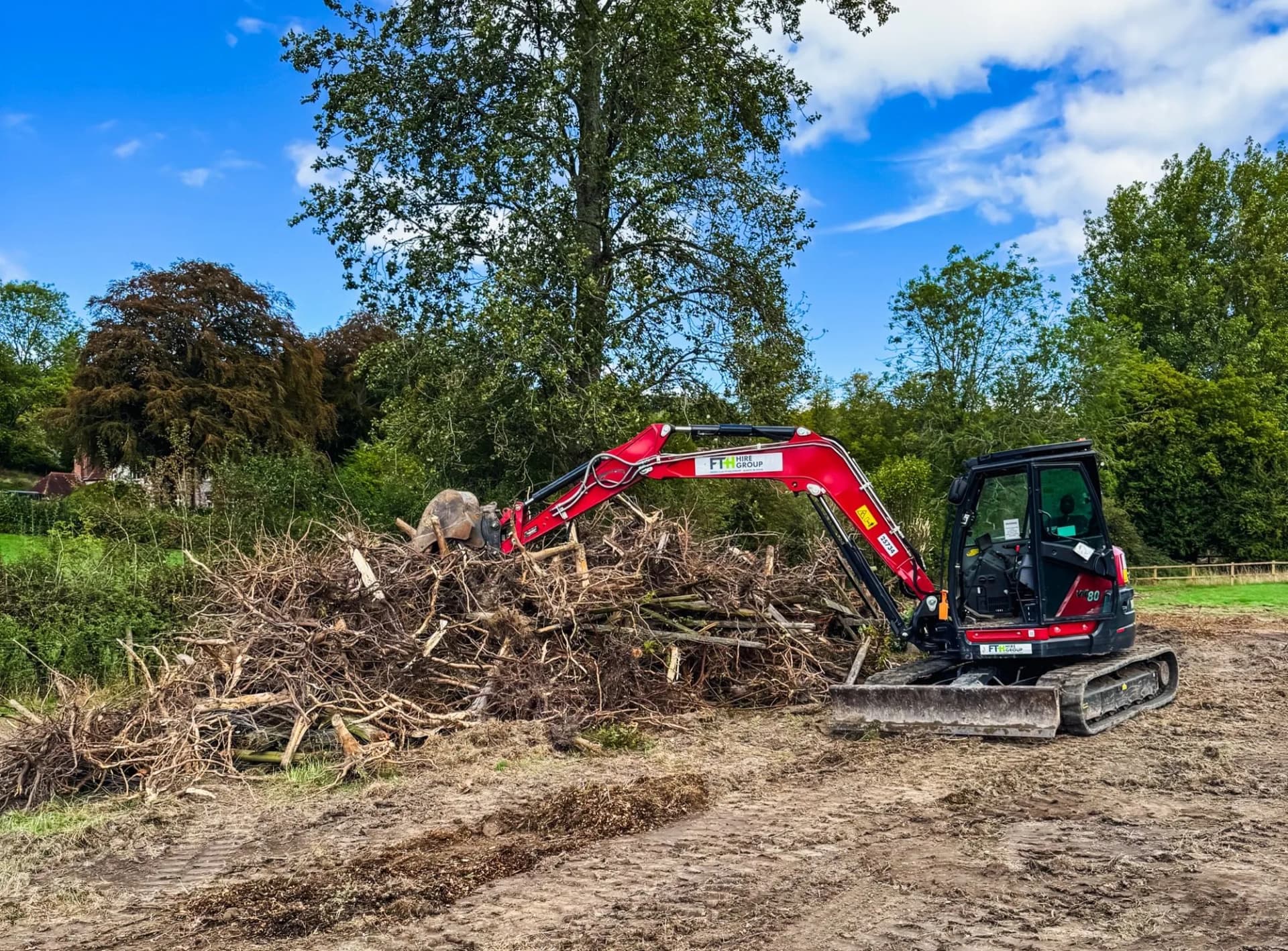
For this stage, we brought an 8-tonne excavator onto site.
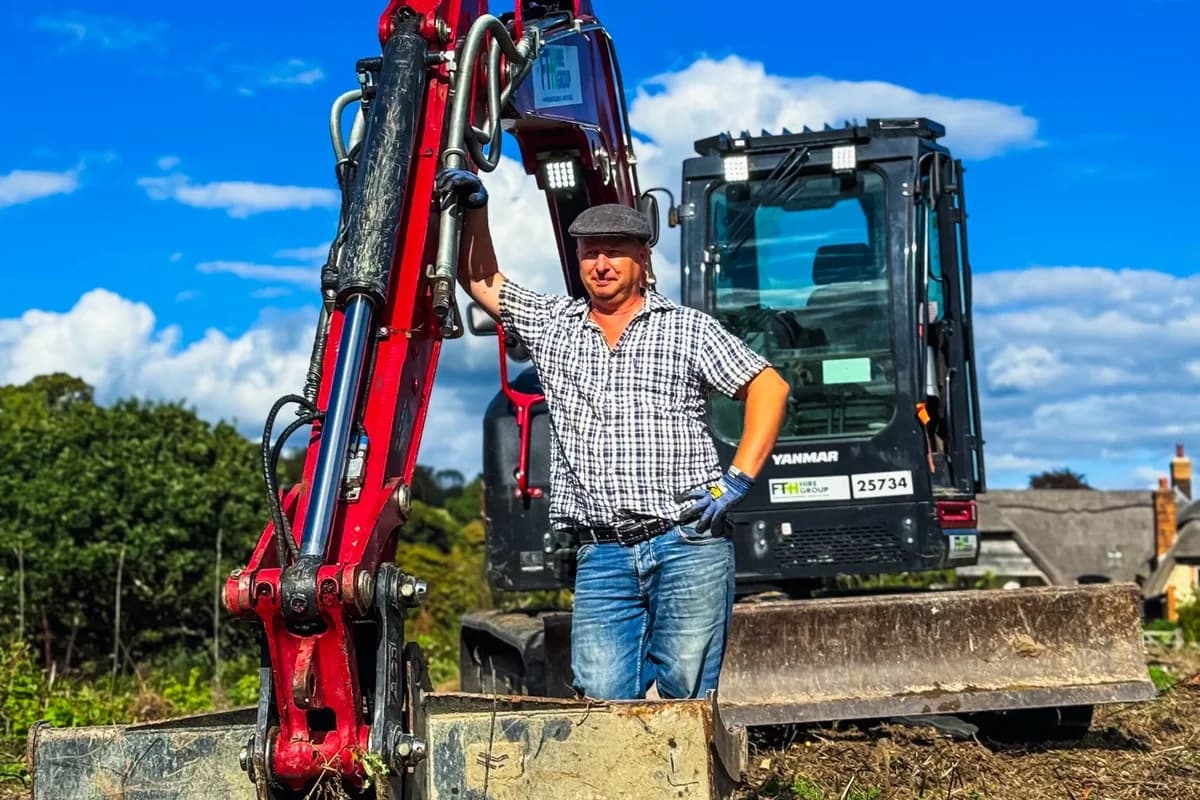
Although the trees had already been felled during our previous visit, hundreds of stumps and root systems remained in the ground. Simply cutting trees at ground level wouldn't have been sufficient for this project. The land will eventually be cultivated and turned back into paddocks, so the stumps needed to be physically removed.
Leaving them in place would not only allow some species to regrow, but would also create serious obstacles when we later begin rotavating and preparing the seedbed.
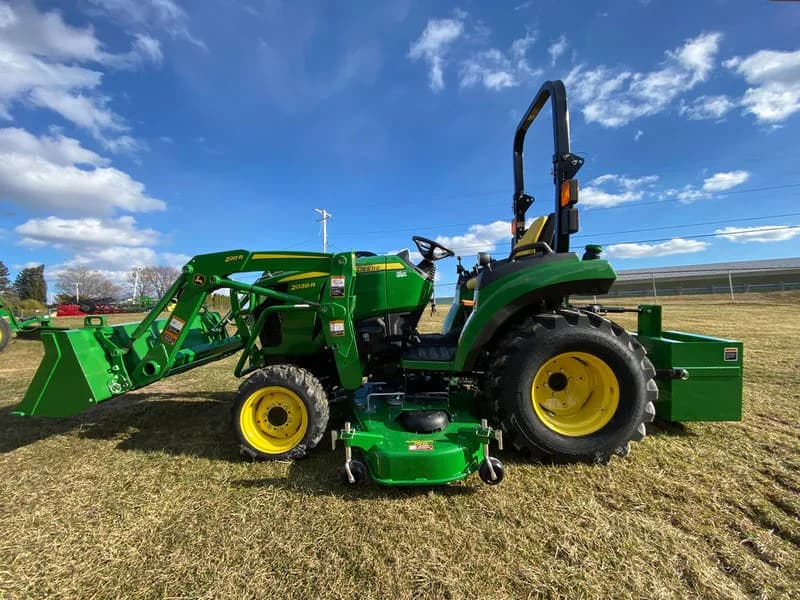
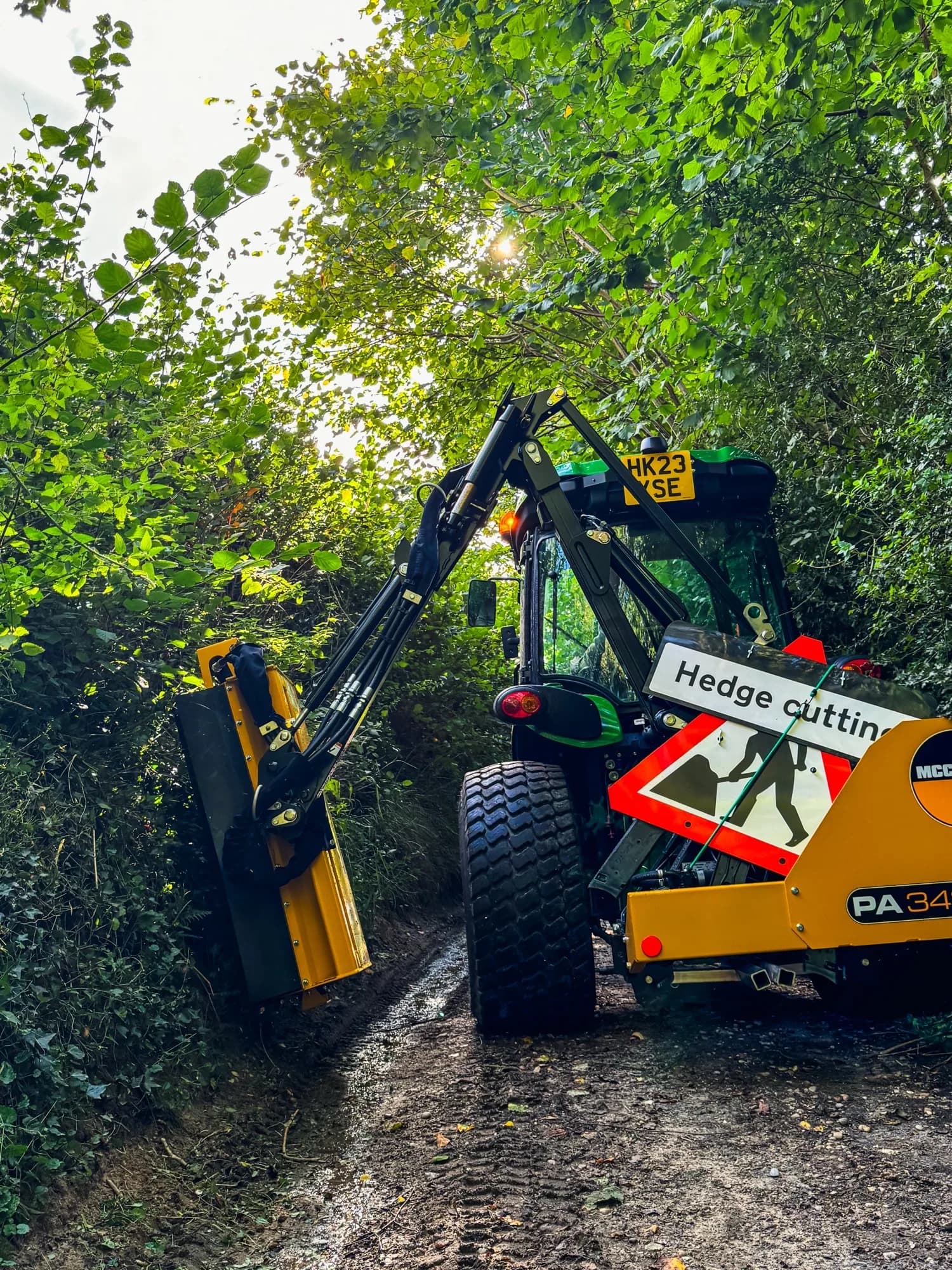
To make the clearance operation more manageable, we also brought in a tractor-mounted hedge cutter on a John Deere 6155R.

This allowed us to quickly reduce much of the remaining hedge and foliage before the excavator moved in.
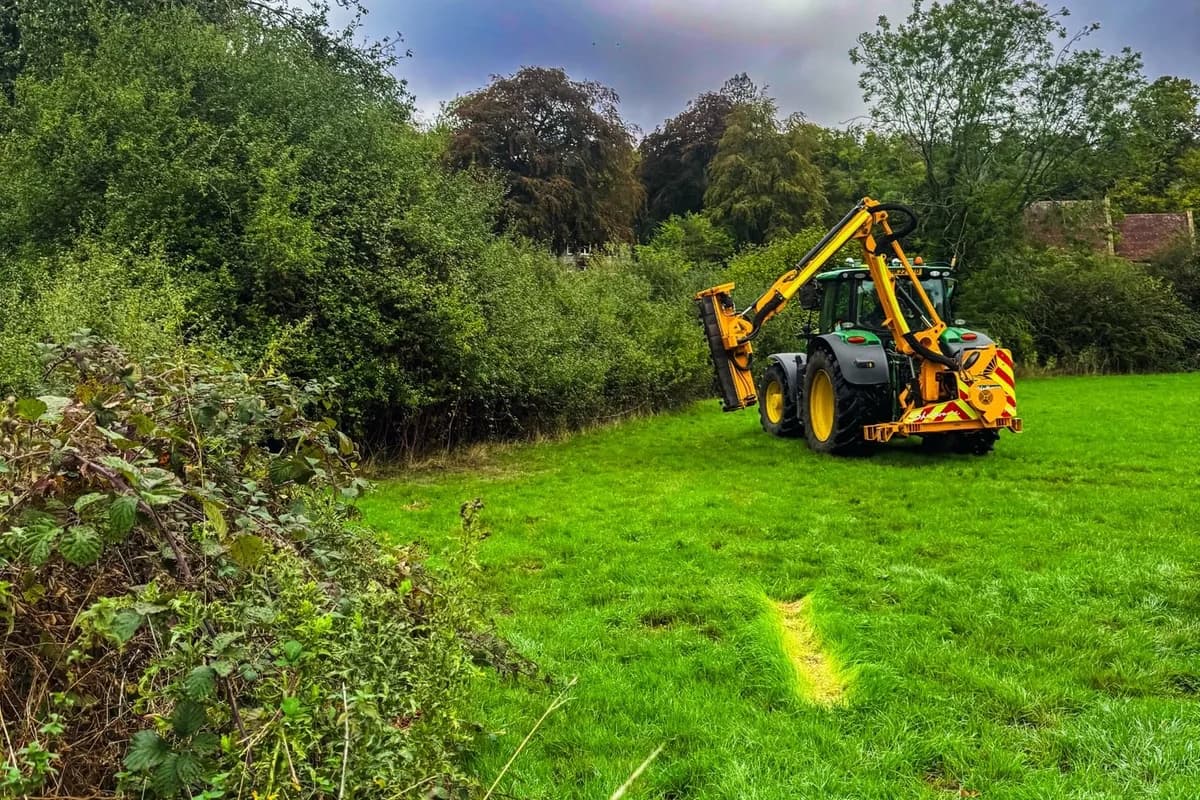
Once the vegetation had been reduced, the excavator could begin working through the site, digging around each stump before lifting the root systems out of the ground.
With around 300 former trees across approximately three acres, this was a substantial part of the project.
Stage 2 – Filling and Levelling the Ground
Removing hundreds of stumps inevitably leaves hundreds of holes.
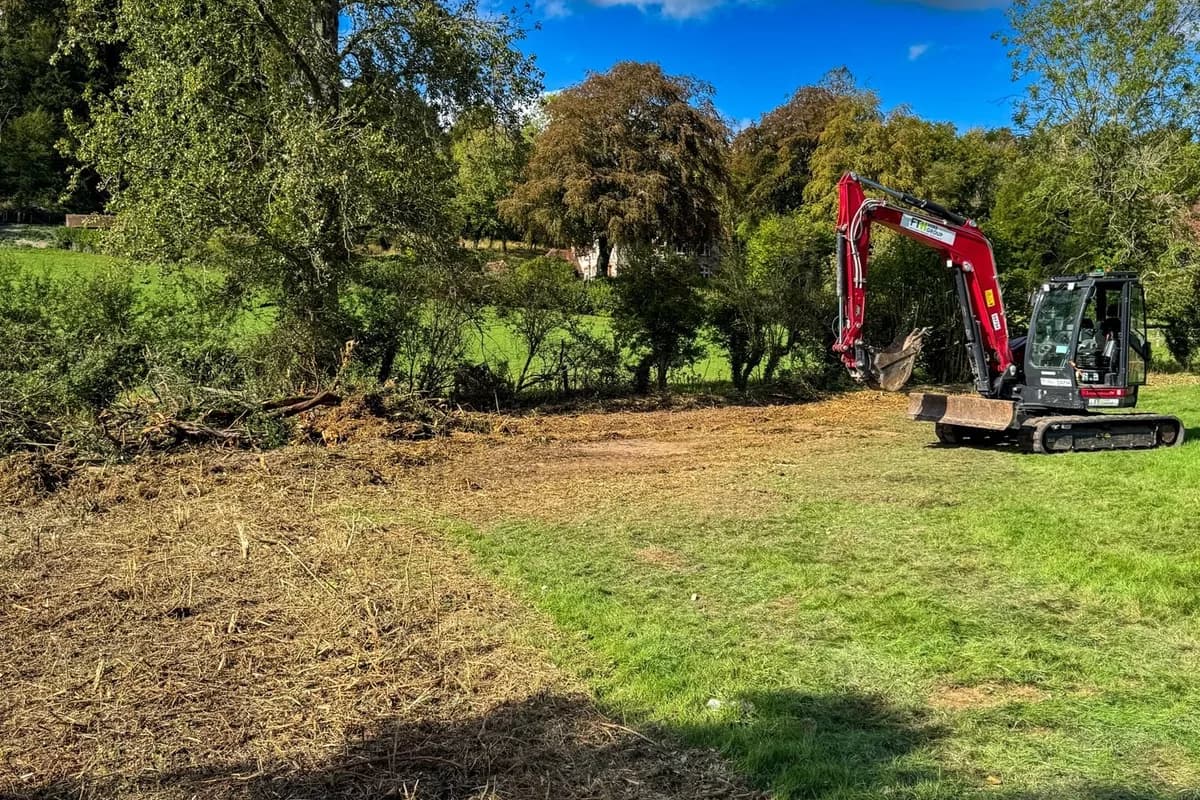
Once the root systems had been excavated, the stumps were moved into piles ready for removal or processing. We could then work back across the field and begin repairing the ground.
Each stump hole was filled using the excavated soil and surrounding material before being tracked and levelled.
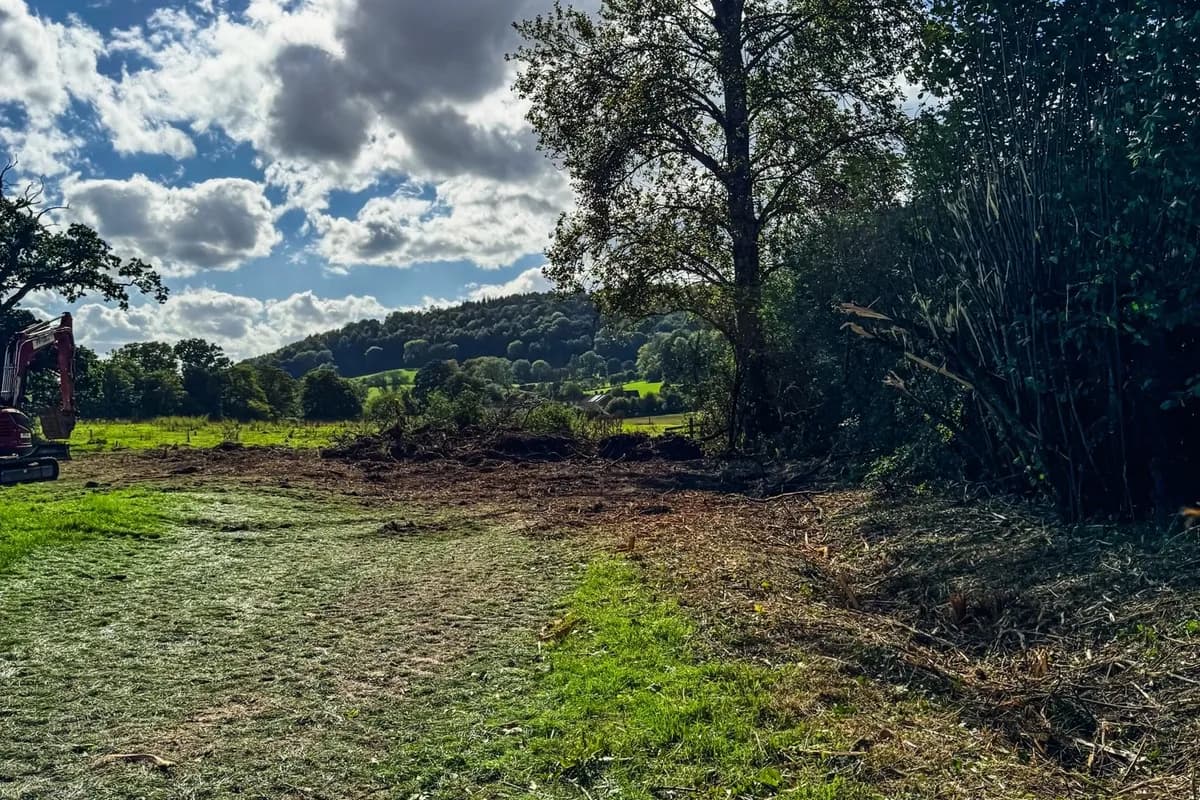
This stage is particularly important because the next phases of the project will involve cultivating the ground.
Trying to rotavate a field containing large stump holes would make cultivation considerably more difficult and could leave an extremely uneven finished surface.
By filling and roughly levelling the holes now, we're creating a much better starting point for the later ground preparation.
Stage 3 – Clearing the Upper Boundary
Attention then moved to the large hedge along the client's upper boundary.
The vegetation on the client's side of the fence was removed before the excavator dug out the larger roots and remaining material.
Once everything had been cleared, the excavator was used to track the area repeatedly, consolidating and smoothing the disturbed ground.
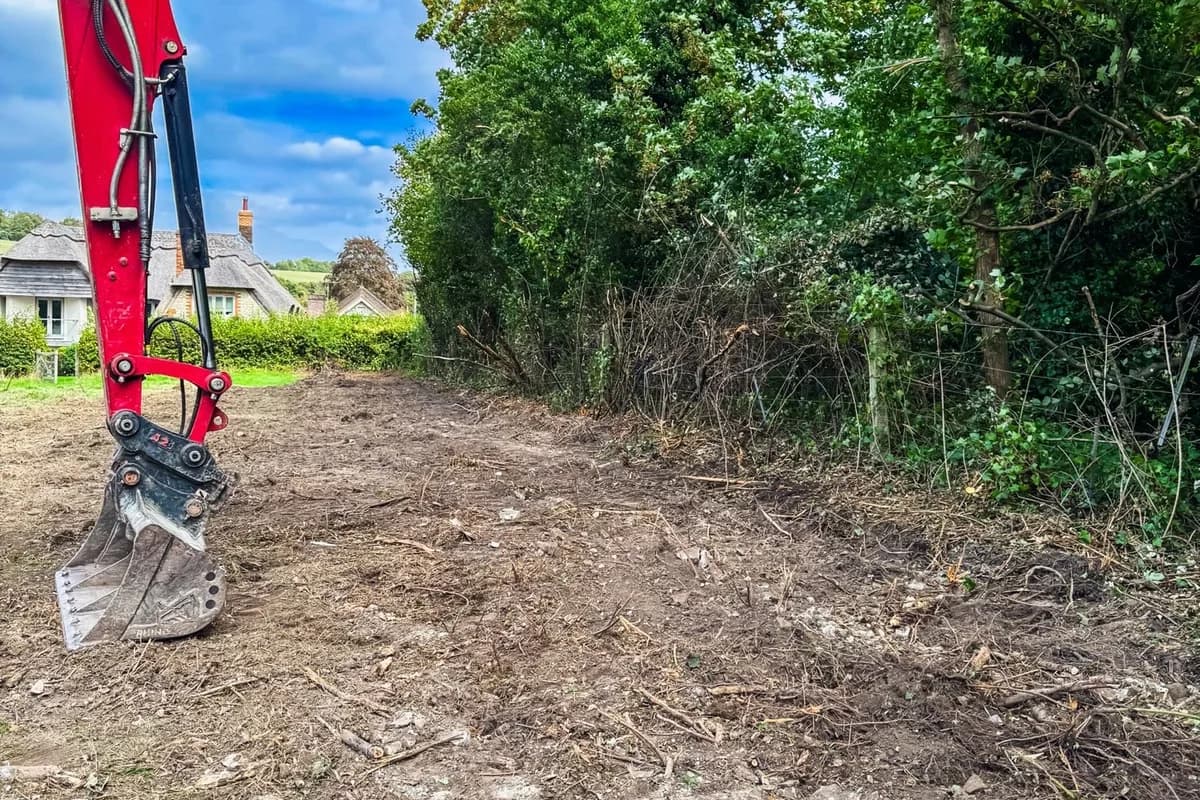
Unlike the main paddock area, this section isn't being immediately returned to grass.
The client intends to use this area for new stables, so our job was to clear the vegetation, remove the major root systems and leave a substantially flatter and more accessible area ready for the next stage of construction and ground preparation.
Drainage and Ditch Creation
Drainage is another important part of bringing this land back into productive use.
One section of the field naturally collects water, so part of the project involves creating a ditch along the bottom of this area. This will intercept and collect water before directing it towards the existing drainage route and nearby stream.
Addressing drainage before carrying out the final paddock renovation work makes considerably more sense than trying to correct water problems once the land has already been cultivated and reseeded.
Good paddock creation isn't simply about putting grass seed into the ground. The underlying problems that affect the land—whether that's drainage, compaction, vegetation or poor ground conditions—need to be addressed first.
From Overgrown Ground to Horse Paddocks
This project is a good example of just how much work can be involved in reclaiming land that has been allowed to become heavily overgrown.
What initially looked like several acres of scrub and young woodland is gradually being opened back up.
So far, the project has involved:
- Flailing approximately three acres of overgrown vegetation
- Felling more than 300 saplings and small trees
- Chipping the resulting branches and timber
- Cutting back substantial mature hedging
- Excavating approximately 300 stumps and root systems
- Filling and levelling the resulting holes
- Clearing ground along the upper boundary for future stables
- Beginning the drainage and ditching work required to improve the wetter areas
But clearance is only the beginning.
The objective isn't simply to make the site look tidy. The end goal is to turn the land into proper, usable horse paddocks.
Coming Next – Creating the Paddocks
With the majority of the trees, stumps and unwanted vegetation removed, we can finally start moving towards the part of the project where the land begins to resemble paddocks again.
The next chapter will focus on preparing the ground for grass establishment.
We'll begin working the soil, correcting the damaged and uneven areas created during clearance, preparing a suitable seedbed and moving towards reseeding the land.
After months of cutting, chipping, digging and clearing, this is where the transformation really starts to become visible.
Next: East Meon Paddock Creation & Rejuvenation Project – Part 3: From Cleared Ground to New Paddocks