Can Thrust Herbicide Kill Prostrate Knotweed?
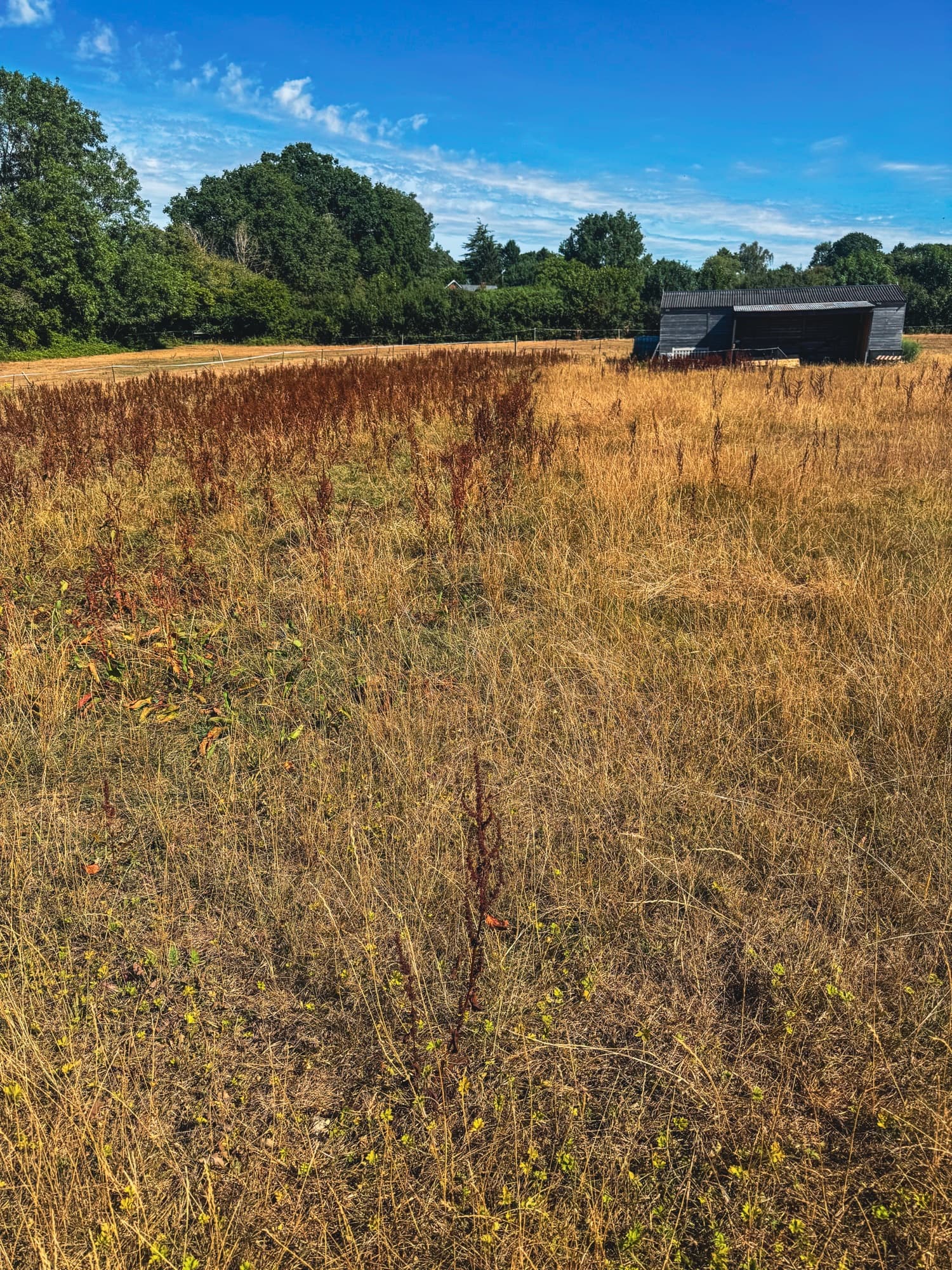
Prostrate knotweed is one of those weeds that often catches paddock owners by surprise. It forms dense mats across gateways, heavily used areas, field entrances and worn patches where grass has struggled to survive. Not only does it look untidy, but it also highlights an underlying problem that many landowners overlook—soil compaction.
One of the questions we are regularly asked is:
"Will Thrust herbicide control prostrate knotweed?"
The answer is yes, to a degree, but success depends heavily on the growth stage of the weed and, more importantly, addressing the conditions that allowed it to establish in the first place.
At Emmerdale Agriculture, we believe successful weed control isn't simply about spraying chemicals. It's about understanding why weeds appear and implementing a complete management programme that restores healthy grassland.
What is Prostrate Knotweed?
Prostrate knotweed (Polygonum aviculare) is a low-growing annual weed that spreads rapidly across compacted soils. Instead of growing upright, it forms flat, sprawling mats that hug the ground, making it difficult for grass to compete.
It is particularly common in:
- Horse paddocks
- Field gateways
- Livestock handling areas
- Farm tracks
- Areas with heavy machinery traffic
- Around water troughs
- Bare patches where grass has worn away
Unlike taller weeds such as ragwort or docks, prostrate knotweed often goes unnoticed until it has covered large areas.
Why Does Prostrate Knotweed Grow?
One of the biggest misconceptions is that weeds simply "appear."
In reality, weeds are indicators of underlying soil conditions.
Prostrate knotweed is almost always associated with:
- Heavy soil compaction
- Poor drainage
- Bare soil
- Frequent foot traffic
- Horse poaching
- Machinery compaction
- Thin grass cover
When soil becomes compacted, grass roots cannot penetrate deeply enough to access water and nutrients. The weakened grass creates bare patches, allowing opportunistic weeds like prostrate knotweed to establish.
This is why spraying alone rarely provides a permanent solution.
Does Thrust Herbicide Work on Prostrate Knotweed?
Thrust herbicide contains selective broadleaf weed control ingredients that provide moderate control of young, actively growing prostrate knotweed plants.
The best results are achieved when:
- Plants are small
- Growth is active
- Weather conditions are favourable
- Grass is actively growing
However, once knotweed has formed dense, mature mats across compacted ground, control becomes much less reliable.
Older plants are tougher, have extensive branching stems, and can survive treatments that would easily control younger seedlings.
This means that while Thrust can suppress the weed, it does not solve the underlying cause of the infestation.
Why Simply Spraying Isn't Enough
Many contractors can spray a paddock.
Far fewer solve the problem.
Whenever we encounter large areas of prostrate knotweed, we ask one question first:
Why is the grass failing?
In nearly every case, the answer is severe soil compaction.
If compaction isn't relieved, the knotweed may disappear temporarily, only to be replaced by another flush of weeds as soon as conditions allow.
Our Complete Approach to Restoring Compacted Horse Paddocks
Rather than relying solely on herbicide, we use a complete renovation programme designed to restore healthy grass growth.
Step 1 – Assess Soil Compaction
We begin by testing the ground using a soil penetrometer.
This measures the resistance within the soil profile and identifies hard pans beneath the surface.
As a general guide, readings above 300 psi indicate significant compaction that is likely restricting root growth, water infiltration and drainage.
Rather than guessing, this allows us to target exactly where remedial work is required.
Step 2 – Subsoiling
Where compaction is identified, we subsoil the paddock.
Subsoiling fractures the compacted layer beneath the surface without completely turning the soil over.
Benefits include:
- Improved drainage
- Better root penetration
- Increased oxygen movement
- Improved water infiltration
- Reduced standing water
- Stronger grass establishment
This creates the conditions grass needs to outcompete weeds naturally.
Step 3 – Rotavating
Once compaction has been relieved, the surface is rotavated to create a fine seedbed.
This mixes the upper soil layers and prepares the paddock for reseeding.
Step 4 – Rolling
Rolling firms the seedbed while maintaining good seed-to-soil contact.
This encourages faster germination and produces a smoother paddock surface.
Step 5 – Reseeding
Fresh grass seed is then sown using an appropriate grass mixture suited to horse paddocks or grazing land.
A dense, healthy grass sward is the best long-term defence against future weed invasion.
Step 6 – Final Roll
A final roll ensures excellent seed contact with the soil, helping maximise germination rates and producing a level, professional finish.
The end result is a renovated paddock with:
- Minimal soil compaction
- Improved drainage
- Stronger grass establishment
- Better grazing quality
- Reduced opportunity for weeds such as prostrate knotweed to return
When is the Best Time to Spray Prostrate Knotweed?
Timing makes a huge difference.
For best results:
- Spray young plants before they spread.
- Avoid spraying during drought or when plants are stressed.
- Ensure weeds are actively growing.
- Follow all product label guidance regarding application rates, grazing restrictions and weather conditions.
Early intervention almost always delivers better control than waiting until the infestation has become established.
Preventing Prostrate Knotweed from Returning
The most successful paddocks combine good weed control with sound grassland management.
Key preventative measures include:
- Relieving soil compaction
- Preventing overgrazing
- Rotating grazing where possible
- Maintaining a dense grass cover
- Overseeding worn areas promptly
- Improving drainage
- Reducing excessive traffic during wet weather
Healthy grass is your best weed control.
Why Choose Emmerdale Agriculture?
At Emmerdale Agriculture, we don't believe in treating symptoms—we solve the cause.
Our paddock renovation service combines professional weed control with soil improvement and grassland restoration to create paddocks that are healthier, more productive and easier to maintain.
Whether your field is suffering from prostrate knotweed, docks, ragwort, thistles or general compaction, we tailor the solution to your land rather than applying a one-size-fits-all treatment.
Contact Emmerdale Agriculture
If your paddock is covered in prostrate knotweed or showing signs of soil compaction, we'd be happy to help.
Our services include:
- Selective weed spraying
- Soil compaction testing
- Penetrometer surveys
- Subsoiling
- Paddock renovation
- Reseeding
- Grassland restoration
- Horse paddock maintenance
Get in touch with Emmerdale Agriculture today to discuss the best solution for your paddock and restore your grazing land to its full potential.
Frequently Asked Questions
Does Thrust herbicide kill prostrate knotweed?
Thrust can provide moderate control of young, actively growing prostrate knotweed, but established infestations are more difficult to eliminate completely.
Why is prostrate knotweed common in horse paddocks?
It thrives in compacted, worn ground where grass struggles to grow, particularly around gateways, feeding areas and high-traffic zones.
Is spraying enough to remove prostrate knotweed permanently?
Usually not. Unless the underlying soil compaction is relieved and grass cover restored, the weed is likely to return.
How do you stop prostrate knotweed coming back?
Relieve soil compaction, improve drainage, maintain a dense grass sward, avoid overgrazing and repair worn areas before weeds become established.
Prostrate knotweed rarely turns up on its own. If it has taken hold across a paddock, our licensed paddock spraying service covers Hampshire and the surrounding counties — and we walk the field first to work out what is actually growing before anything goes in the tank.
Knotweed rarely turns up alone. If the paddock also carries docks, thistles or ragwort, our weed control service covers the lot in one visit.
How the spray goes on matters as much as what’s in the tank. See why we use air inclusion nozzles for how we keep herbicide off neighbouring grazing, hedges and watercourses.