Paddock management is one of those phrases that gets thrown around a lot, but it means different things to different people. For some it's just keeping the grass down. For others it's a full annual programme of aeration, weed control, reseeding and drainage work. Both are valid — it depends on what the land is being used for and what shape it's in.
This is a plain-English rundown of what paddock management actually covers, the jobs that tend to make the biggest difference, and how we approach it across Hampshire and the neighbouring counties.
What paddock management really means
At its core, paddock management is keeping grazing land productive, safe and reasonably tidy. That means:
- Grass at a sensible height for the time of year and the animals on it
- Weeds kept under control before they take over
- Soil that isn't so compacted or waterlogged that grass can't grow
- Muck, ruts, molehills and poaching dealt with before they turn into bigger problems
- Fences, hedges and ditches doing their job
Most paddocks don't need everything on that list every year. But nearly every paddock we look at needs at least two or three of them.
The jobs that make the biggest difference
Topping and flail mowing
If the grass is getting away from you, or horses are leaving rough patches around the dung areas, topping evens things out and stops seed heads forming on weeds. A paddock topper is quick and cheap for big open fields. A flail mower copes better with longer, tougher growth and leaves a tidier finish. If you don't want the cuttings left on the surface — useful where laminitis is a concern, or where the grass is very long — flail collecting picks it up as it goes.
Harrowing and rolling
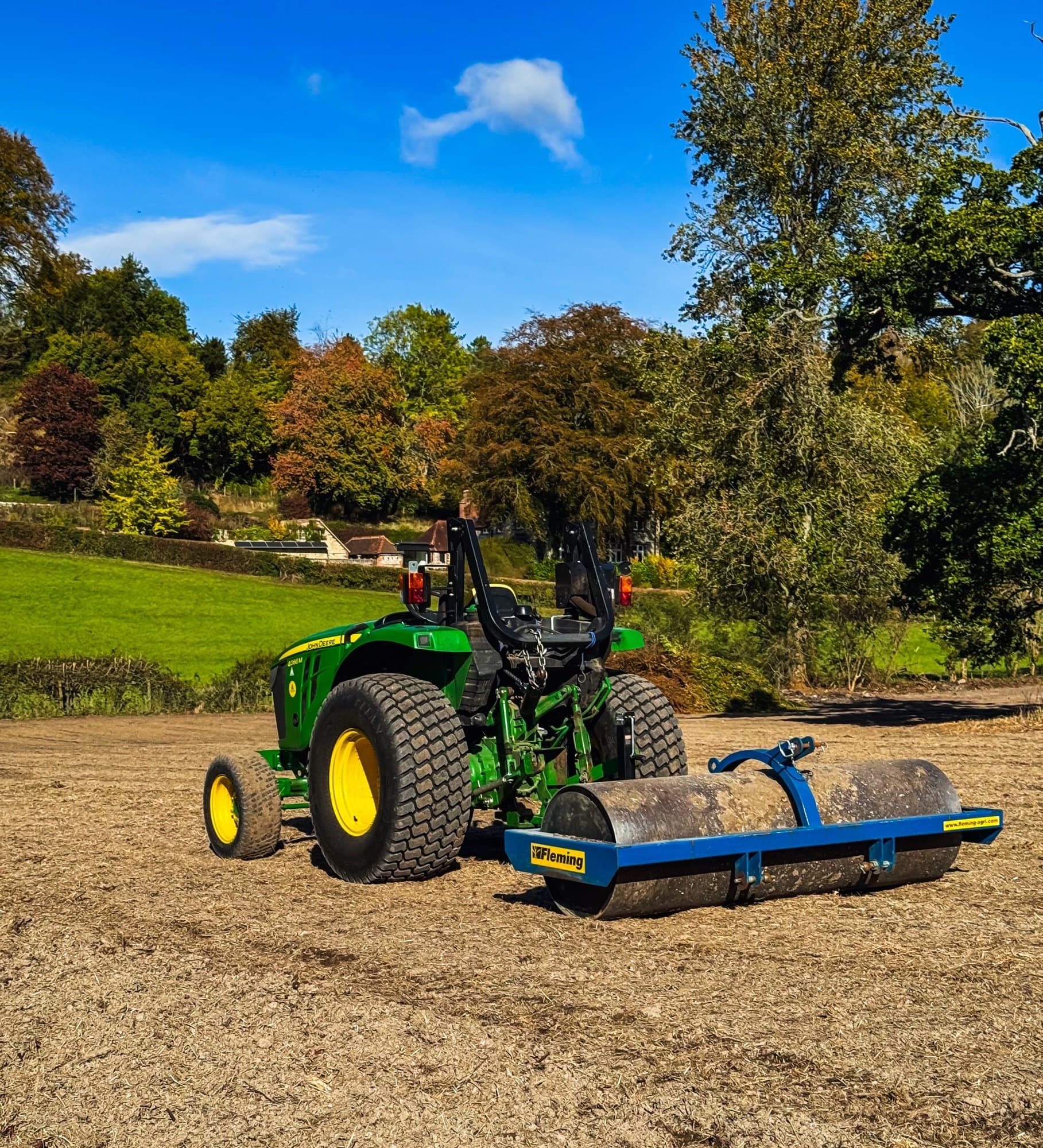
Harrowing pulls out dead thatch, breaks up droppings and lets air and light get to the base of the sward. Rolling pushes stones back down, firms up poached ground and levels off hoofprints after a wet winter. They're often done back-to-back in spring. More on timing in our post on when to harrow paddocks. If you need both jobs done, harrowing and rolling usually pair up naturally.
Weed control and spraying
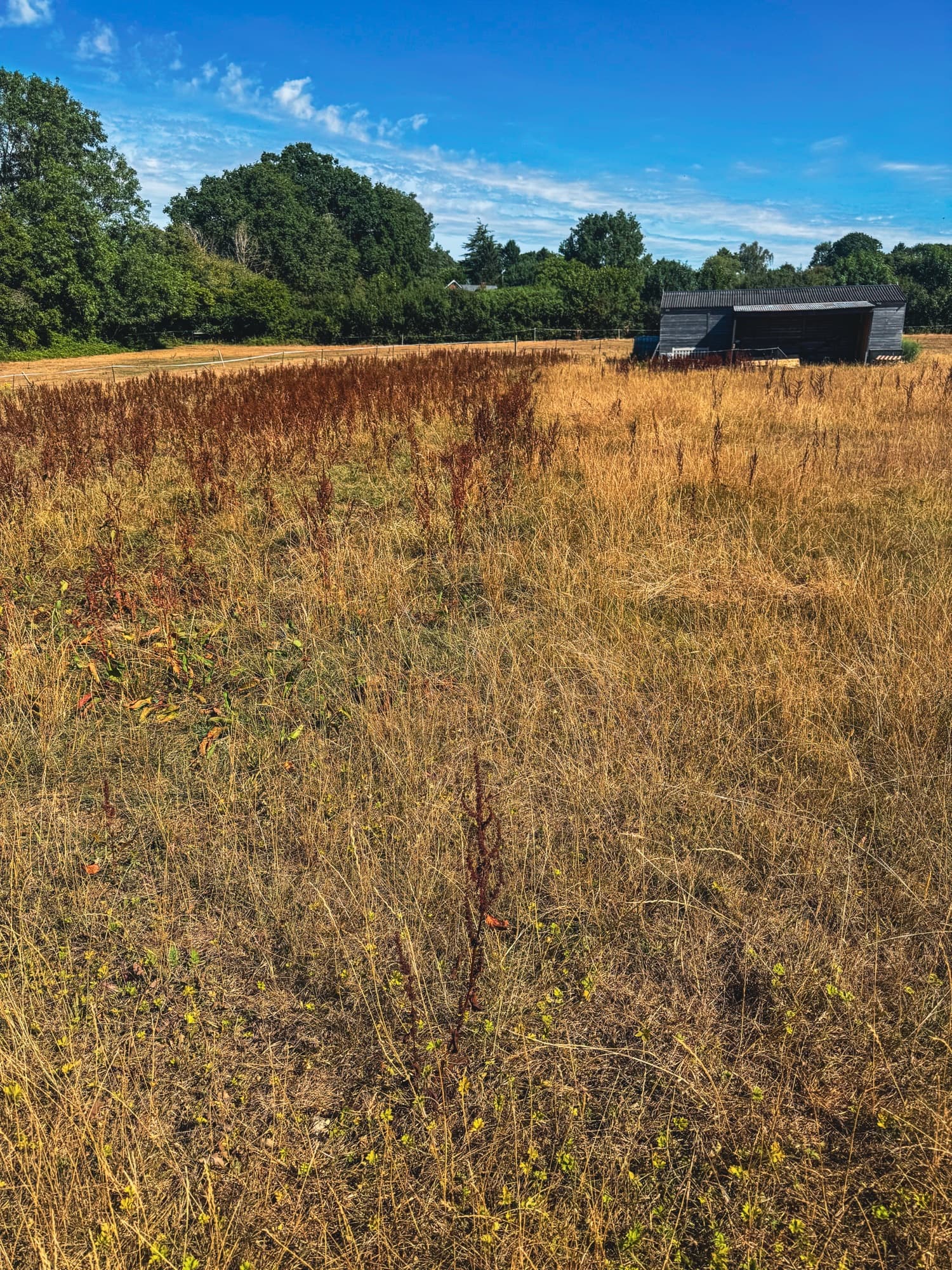
Docks, thistles, ragwort, buttercups, nettles — the usual suspects. Once they get established they're hard to shift by mowing alone. Selective spraying knocks them back without killing the grass. We're licensed to spray, and the weed control and spraying pages cover what we can and can't treat.
Fertiliser and overseeding
If your grass is thin, patchy or slow to come back after grazing, the soil may be short of nutrients or the sward may just be worn out. Fertiliser application puts back what grazing takes out. Overseeding fills in bare patches without the cost and disruption of a full reseed.
Drainage, compaction and heavier work
Parts of Hampshire sit on clay, other parts on chalk, and both cause different problems. Heavy clay compacts under hooves and holds water; chalk can dry out and thin the sward in summer. Where compaction is the issue, we can look at deeper aeration. Where drainage is genuinely poor, mole ploughing or ditch clearance may be needed. For paddocks that have gone past the point of tidying up, rotavating and stone burying reset the ground so you can start again with a clean seedbed.
Hedges and boundaries
Overhanging hedges shade the grass, drop leaves and slowly eat into the usable area of the paddock. Annual hedge cutting keeps them in check and stops them turning into a much bigger job in three or four years' time.
A rough seasonal shape
Every paddock is different, but as a general guide:
- Late winter / early spring: harrow, roll, look at fertiliser, plan any spraying
- Spring into summer: topping as needed, spot-spraying weeds, overseeding thin areas
- Summer: keep on top of grass height, watch for poaching around gates and water troughs
- Autumn: last cut, overseeding, hedge cutting, drainage work before it gets too wet
- Winter: rest the ground where you can, keep an eye on ditches
Nothing here is fixed. A wet spring can push everything back by weeks. A dry summer might mean no topping needed at all.
How we work
We cover Hampshire and the surrounding counties. Most jobs start with a look at the field — either in person or from photos and a quick chat — so we can work out what's actually needed rather than selling you a package you don't want. Some paddocks need one visit a year. Others need a proper programme spread across the seasons. Both are fine.
We run the machinery ourselves, so if you want to know exactly what a job involves before booking, ask. It's usually easier to explain over a phone call than in an email.
Getting in touch
If you're not sure where to start, or you've got a paddock that's been let go and you want an honest view on what it needs, drop us a message. Happy to take a look and tell you what we'd do — and what can wait. For the horse-owner's side of the same subject, our paddock management overview covers why it matters for the animals as much as the grass.