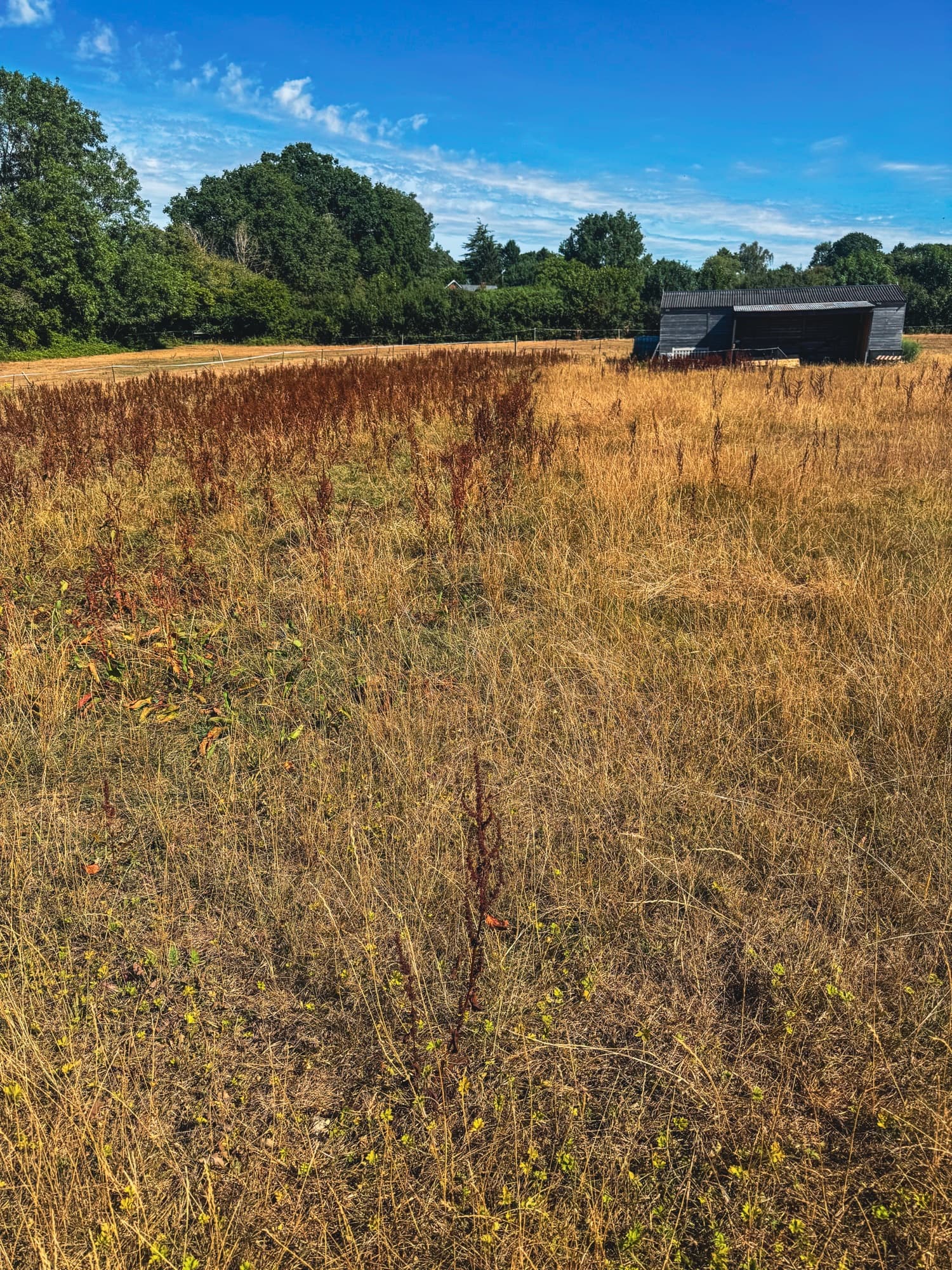
Bracken is one of the most stubborn and persistent weeds found on UK grazing land. Once established, it can quickly dominate paddocks, woodland edges, banks and rough grazing, reducing the amount of usable pasture and making fields increasingly difficult to manage.
For horse paddocks in particular, allowing bracken to spread unchecked can eventually lead to large areas of grazing becoming unusable. Fortunately, there are effective methods of control, including herbicide applications using Squire Ultra in combination with Thrust, alongside good long-term land management.
In this guide, we'll explain why bracken is so difficult to eradicate, how herbicide treatments can help, why air inclusion nozzles should be considered for spraying, and why regular mowing remains a viable alternative where spraying isn't practical.
Why Is Bracken So Difficult to Get Rid Of?
One of the biggest misconceptions is that bracken behaves like an ordinary weed.
It doesn't.
The leafy fronds you see above ground are only a small part of the plant. Beneath the surface lies an extensive underground network of rhizomes that can stretch for many metres in every direction.
These underground stems act as massive energy stores.
Every spring, the rhizomes use stored carbohydrates to produce new fronds. Throughout the summer, those fronds act like solar panels, collecting energy from sunlight before sending it back underground to replenish the rhizomes.
This annual cycle is what makes bracken so resilient.
Even if every visible frond dies back naturally in autumn, the underground system survives and simply sends up fresh growth the following year.
It's also why simply cutting a few fronds rarely solves the problem.
Why One Treatment Usually Isn't Enough
Many landowners expect one herbicide application to completely eliminate bracken.
Unfortunately, that's rarely how bracken behaves.
Although a well-timed herbicide application can kill the current season's growth and significantly weaken the underground rhizomes, large established colonies often contain decades of stored energy.
Some rhizomes may survive the first treatment and send up new growth the following season.
This doesn't necessarily mean the herbicide has failed—it simply reflects how resilient the plant is.
The most successful bracken control programmes involve:
- Annual monitoring.
- Spot treatment of regrowth.
- Preventing new colonies establishing.
- Maintaining healthy grass competition.
Over several seasons, the underground reserves become progressively weaker until the infestation becomes manageable.
Patience is an important part of successful bracken control.
Using Squire Ultra and Thrust for Bracken Control
One effective approach is applying Squire Ultra together with Thrust.
Squire Ultra is commonly used for bracken control, while Thrust controls a wide range of broad-leaved weeds that are often present in the same paddocks, including species such as docks, nettles and thistles where listed on the product label.
By treating multiple weed problems during the same spraying operation, landowners can:
- Reduce the number of field passes.
- Save fuel and labour.
- Improve overall pasture quality.
- Restore productive grazing more quickly.
Always ensure both products are used strictly in accordance with their current UK labels, including approved application rates, livestock grazing restrictions, environmental precautions and any guidance on tank mixing.
Timing Is Everything
The timing of a herbicide application can make a significant difference to the results.
Bracken should generally be treated when the fronds are fully expanded and actively growing. At this stage, the plant is transporting nutrients down into the rhizomes, allowing the herbicide to move with the plant's natural processes.
Spraying too early may reduce effectiveness because there is insufficient leaf area for good uptake.
Spraying after the fronds have begun to die back can also reduce control because the plant is no longer actively moving nutrients through the system.
Choosing the right timing is often just as important as choosing the right herbicide.
Why We Use Air Inclusion Nozzles
No matter how effective a herbicide is, poor application technique can significantly reduce its performance.
One of the biggest risks during spraying is drift.
Bracken frequently grows along:
- Woodland margins
- Hedgerows
- Watercourses
- Banks
- Fence lines
- Neighbouring properties
Fine spray droplets can be carried surprisingly long distances by even light winds.
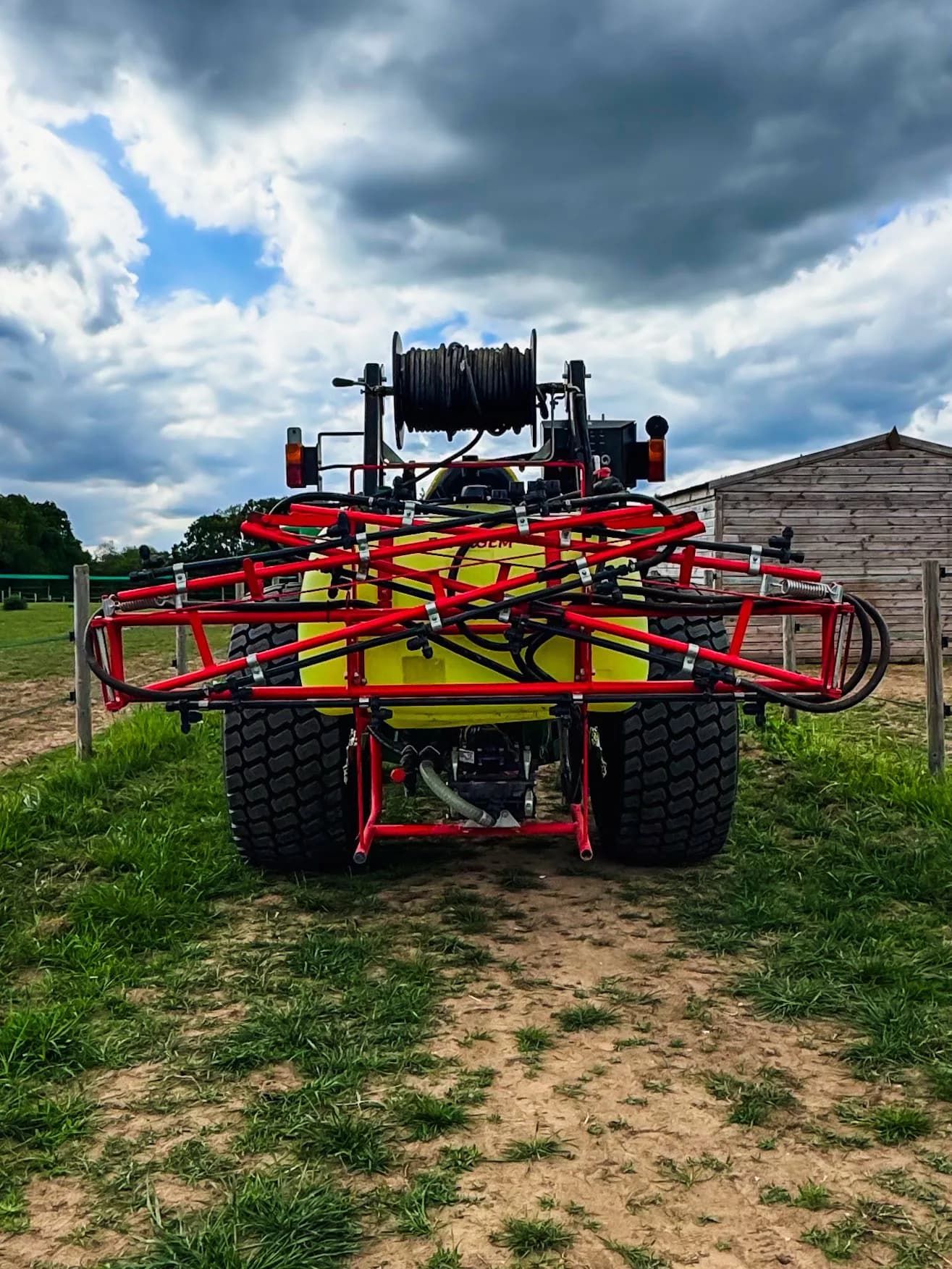
This is why we strongly recommend the use of air inclusion (AI) nozzles whenever appropriate.
These specialist nozzles produce larger, air-filled droplets that are much less susceptible to drift than conventional flat-fan nozzles.
The benefits include:
- Significantly reduced spray drift.
- Improved placement onto the target.
- Less risk of damaging neighbouring vegetation.
- Better environmental stewardship.
- Greater confidence when spraying around sensitive areas.
Although the droplets are larger, modern air inclusion nozzles still provide excellent herbicide coverage when operated at the correct pressure, boom height and forward speed.
Combined with a properly calibrated sprayer and suitable weather conditions, they are considered best practice for many herbicide applications.
An Alternative: Keep Mowing It Down
Not every paddock can be sprayed.
There may be environmental restrictions, sensitive habitats, awkward terrain or simply a preference to avoid herbicides.
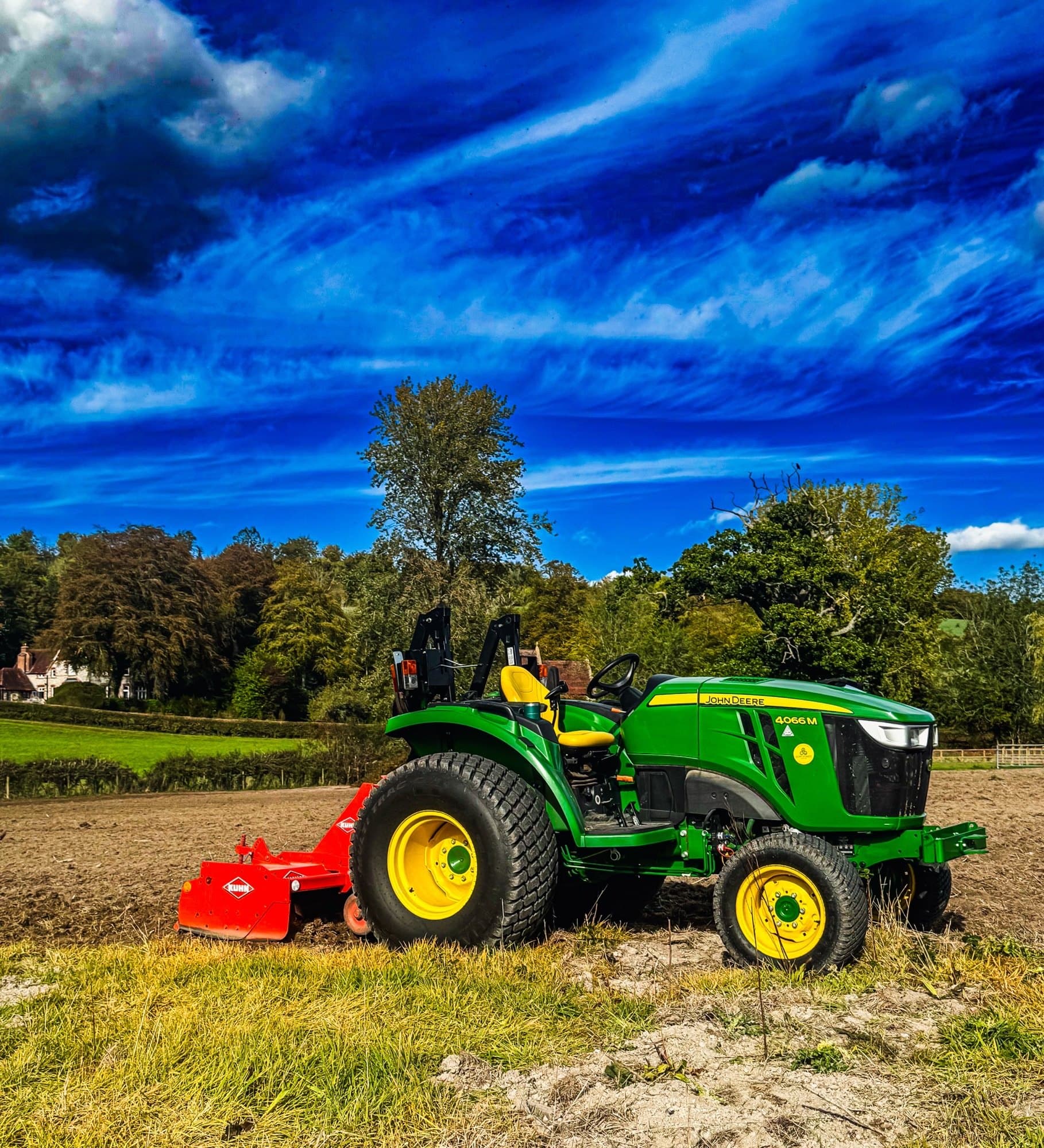
In these situations, repeated mowing or cutting remains a valid long-term control strategy.
Remember how bracken stores energy underground?
Every time you cut off the fronds, you remove the plant's ability to photosynthesise.
The rhizomes are then forced to use their stored energy to produce replacement growth.
If this process is repeated consistently over several years, the underground reserves become depleted.
Eventually, the plant has less energy available to produce vigorous new growth.
However, consistency is essential.
One annual cut will have little long-term effect.
Instead, successful mowing programmes usually involve repeated cutting during the growing season, year after year, to continually exhaust the rhizome's energy reserves.
While this method often takes longer than herbicide treatment, it can be an excellent option where spraying is unsuitable.
Good Spraying Practice Makes All the Difference
Successful weed control depends on much more than selecting the right product.
Always:
- Calibrate your sprayer before use.
- Use the correct water volume for your equipment.
- Maintain the recommended boom height.
- Spray only in suitable weather conditions.
- Avoid strong winds and gusty conditions.
- Wear the required personal protective equipment (PPE).
- Follow all instructions on the product labels.
Taking time to prepare properly often delivers better results than increasing application rates.
A Long-Term Management Plan
Bracken control should never be viewed as a one-off job.
The most successful paddock management programmes combine:
- Early identification of new infestations.
- Timely herbicide applications where appropriate.
- Follow-up treatment of surviving patches.
- Regular mowing where spraying isn't suitable.
- Maintaining a dense, healthy grass sward to reduce opportunities for recolonisation.
By adopting a long-term approach, even heavily infested land can often be restored to productive grazing over time.
Final Thoughts
Bracken is one of the toughest weeds faced by landowners because its real strength lies hidden beneath the ground. The vast rhizome system stores enough energy to produce fresh growth year after year, making complete eradication a gradual process rather than a quick fix.
Where herbicides are appropriate, Squire Ultra used alongside Thrust can be an effective part of an integrated weed management programme when applied in accordance with the current UK product labels. Pairing the treatment with air inclusion nozzles helps minimise spray drift and improves application accuracy, particularly around hedgerows, woodland margins and other sensitive areas.
For sites where herbicide use isn't possible, regular mowing offers a practical alternative. Although it requires persistence over several growing seasons, repeatedly removing the fronds gradually weakens the underground rhizomes by preventing them from replenishing their energy reserves.
Whether you choose herbicide treatment, repeated mowing or a combination of both, the key to successful bracken control is consistency. With a planned, long-term approach, even well-established infestations can be significantly reduced, helping to reclaim valuable grazing land and improve the health and usability of your paddocks.
Frequently Asked Questions About Bracken Control
What is the best herbicide for bracken in the UK?
There isn't a single "best" herbicide for every situation. The most suitable product depends on the type of land, the surrounding vegetation and whether livestock graze the area. For many grazing situations, Squire Ultra is commonly used for bracken control. Where other broad-leaved weeds such as docks, nettles or thistles are also present, it may be appropriate to use Thrust as part of the treatment programme, provided both products are used in accordance with their current UK labels and any guidance on tank mixing.
Can you spray bracken in horse paddocks?
Yes, bracken can be treated in horse paddocks, but it's essential to choose products that are approved for the intended use and to follow all label instructions. This includes observing any grazing restrictions before horses are allowed back onto the treated area.
Always check the latest UK product labels before application, as approvals and restrictions can change.
When is the best time to spray bracken?
Bracken is generally treated when the fronds are fully expanded and actively growing. At this stage, the plant is moving nutrients down into its underground rhizomes, helping the herbicide reach the parts of the plant that matter most.
Spraying too early or after the fronds begin to die back can reduce the effectiveness of the treatment.
Why is bracken so difficult to kill?
Bracken survives because most of the plant is hidden underground.
The visible fronds only exist for one growing season, but beneath them lies an extensive network of rhizomes that stores large amounts of energy. Even if the visible growth dies or is removed, the underground system can simply produce new fronds the following spring.
This is why effective control usually requires several years of management rather than a single treatment.
Will mowing kill bracken?
Repeated mowing can significantly weaken bracken, but it requires patience.
Every time the fronds are cut, the plant has to use stored energy from its underground rhizomes to produce replacement growth. If this is repeated consistently over several growing seasons, those energy reserves become depleted and the infestation gradually weakens.
Occasional mowing is unlikely to have much impact, but a planned programme of repeated cutting can be highly effective where herbicides cannot be used.
Is one herbicide treatment enough?
Usually not.
Large, established bracken colonies often contain decades of stored energy underground. A well-timed herbicide application can dramatically reduce the infestation, but follow-up treatments are commonly required to deal with regrowth from surviving rhizomes.
Viewing bracken control as a long-term management programme generally produces the best results.
Why are air inclusion nozzles recommended?
Air inclusion (AI) nozzles produce larger, air-filled droplets that are far less likely to drift than conventional spray nozzles.
This helps ensure the herbicide lands where it's intended while reducing the risk of affecting nearby hedgerows, trees, watercourses or neighbouring land.
For many herbicide applications, particularly around field boundaries, they are considered best practice.
Can I spray bracken near hedgerows or woodland?
Extra care should always be taken when spraying near sensitive habitats.
Use appropriate drift-reducing nozzles, maintain the correct boom height, avoid spraying in windy conditions and always observe any statutory buffer zones and label requirements.
Protecting surrounding vegetation is just as important as controlling the target weed.
Does bracken spread quickly?
Yes.
Bracken spreads both through underground rhizomes and by spores. Once established, a colony can gradually expand each year if left unmanaged, eventually reducing the amount of productive grazing available.
Early intervention is almost always easier and more cost-effective than tackling a mature infestation.
What's the fastest way to get rid of bracken?
There is rarely a quick fix.
The most effective approach is usually a combination of:
- Timely herbicide application where appropriate.
- Follow-up treatment of any regrowth.
- Regular monitoring.
- Maintaining healthy grass competition.
- Repeated mowing where herbicides cannot be used.
Consistency over several seasons almost always produces better results than relying on a single treatment.
How can Hampshire Paddock Management help?
At Hampshire Paddock Management, we specialise in restoring and maintaining healthy grazing land throughout Hampshire and the surrounding counties. Whether you're dealing with a small patch of bracken or a heavily infested field, we can assess your paddocks and recommend the most suitable management strategy.
Our services include:
- Bracken control.
- Selective weed spraying.
- Boom spraying.
- Horse paddock weed management.
- Grazing land restoration.
- Annual paddock maintenance programmes.
If you're unsure which approach is right for your land, we're always happy to provide practical advice and recommend the most effective long-term solution.
Bracken control is a multi-season job rather than a single pass. If you would rather it was handled for you, our paddock spraying service is PA1, PA2 and PA6 certified and covers Hampshire and the surrounding counties.