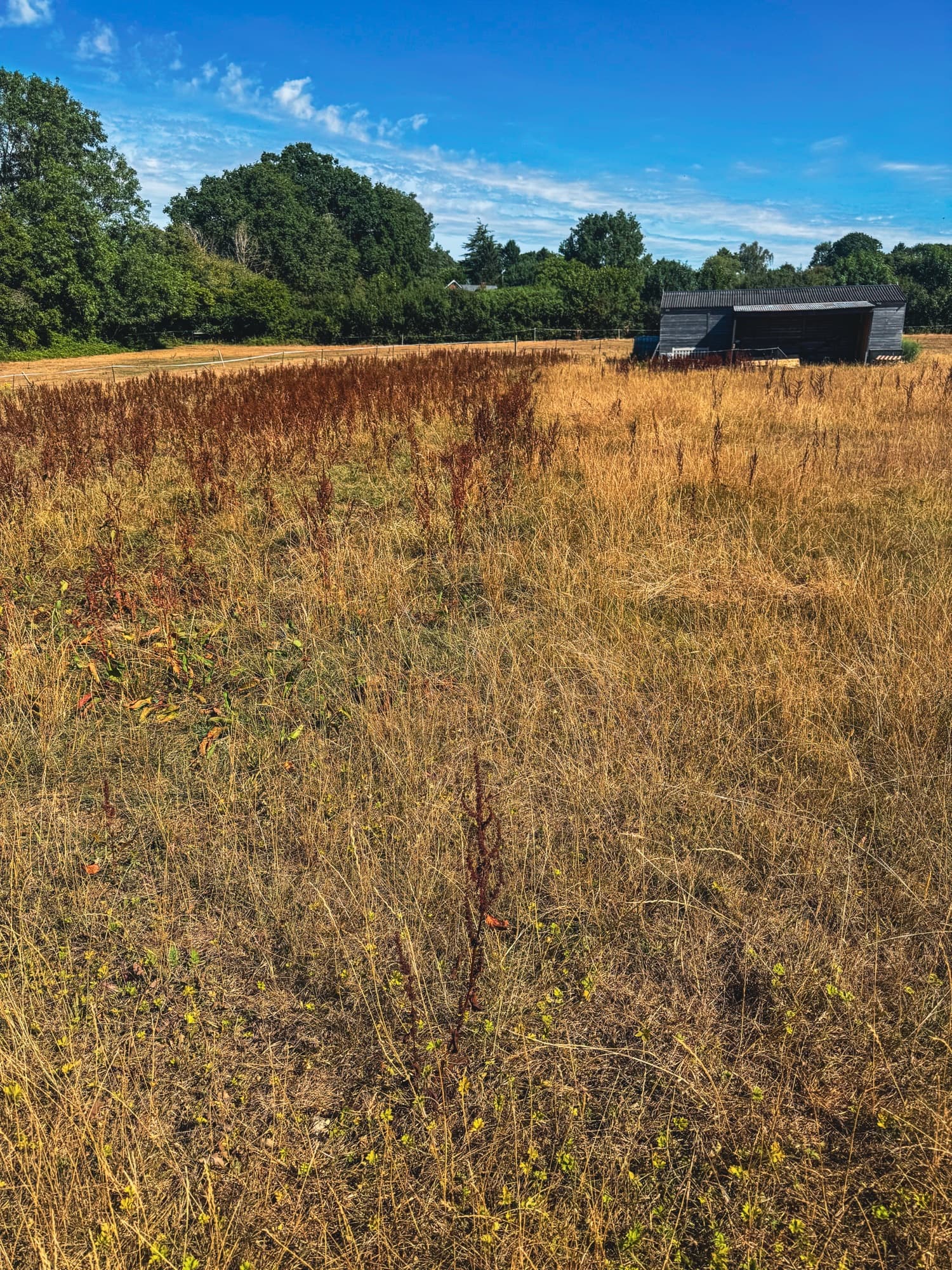
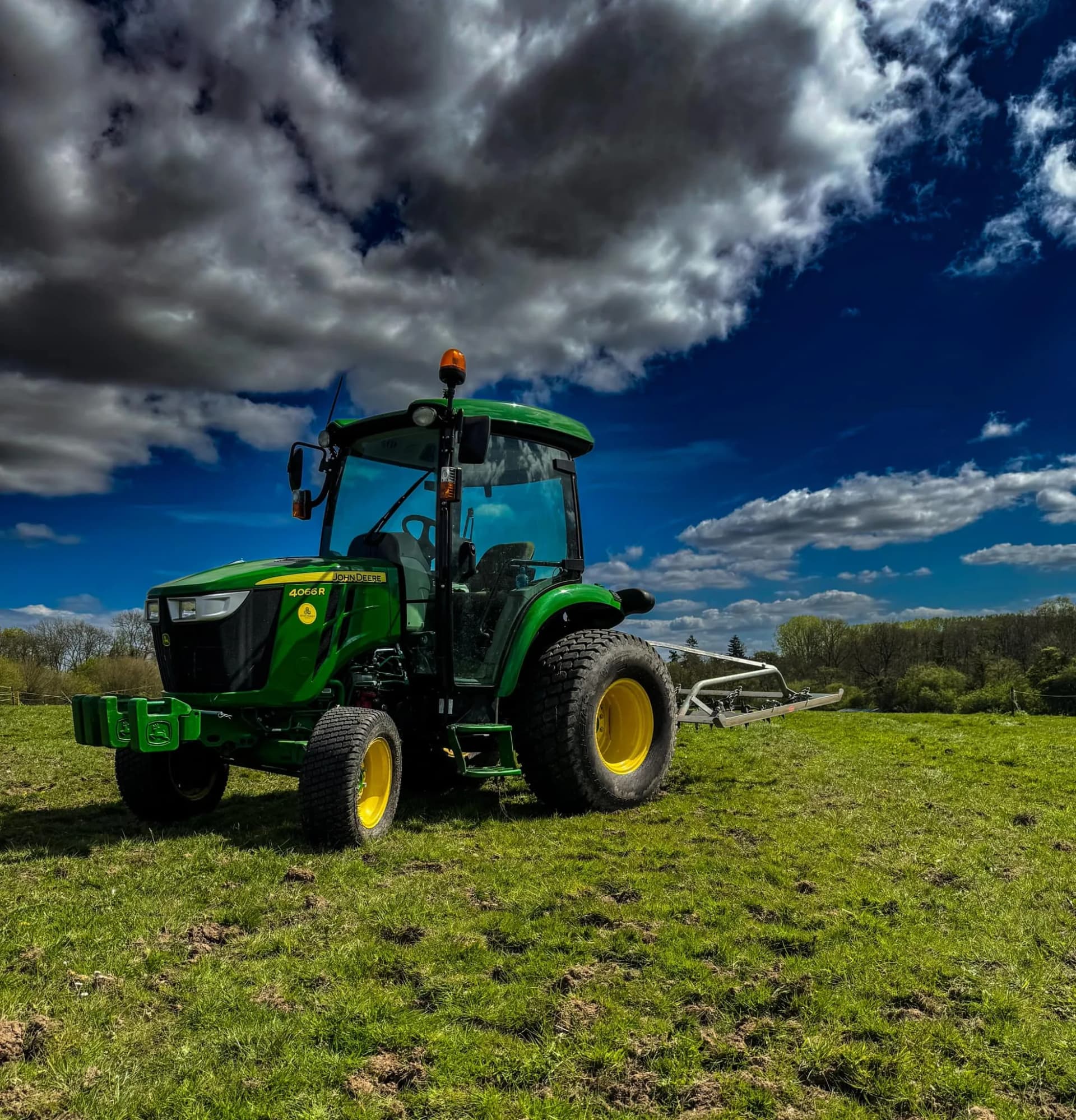
Ground compaction is one of the biggest hidden problems affecting horse paddocks and grazing fields. While the surface may look perfectly healthy, the soil underneath can become so compacted that grass struggles to establish, rainwater sits on the surface, and paddocks quickly become muddy during wet weather.
At Emmerdale Agriculture, we use a proven process to identify and eliminate soil compaction, transforming tired, uneven paddocks into healthy, free-draining grazing land ready for new grass seed.
What is Ground Compaction?
Ground compaction occurs when the soil particles are compressed together, reducing the air spaces between them. This commonly happens due to:
- Horses repeatedly walking the same areas.
- Heavy machinery operating in wet conditions.
- Years of grazing without soil renovation.
- Natural settling of the ground over time.
As the soil becomes denser, grass roots can no longer penetrate deeply into the ground. Instead of developing a strong root system, they remain shallow, making the grass less resilient during both wet and dry periods.
Compacted soil also prevents rainfall from soaking into the ground effectively. Rather than draining naturally, water sits on the surface, creating muddy gateways, standing water and damaged pasture.
Step One: Testing the Soil with a Penetrometer
Before carrying out any remedial work, we first assess the severity of the compaction using a soil penetrometer.
A penetrometer measures the resistance of the soil in pounds per square inch (PSI) as it is pushed into the ground. This gives us an accurate picture of where the compacted layers are and how severe they have become.
Generally, once readings begin exceeding 300 PSI, grass roots start to struggle to penetrate the soil effectively. This indicates that the paddock has developed a hard compaction layer—often known as a hard pan or plough pan—which restricts drainage and root growth.
Testing first means we only carry out the work where it is genuinely needed, ensuring the correct working depth for the machinery.
Step Two: Subsoiling to Break the Hard Pan
Once we've identified the compacted layer, we use a subsoiler to fracture the soil beneath the surface without completely turning it over.
Unlike a plough, a subsoiler works deep into the ground, lifting and cracking the compacted layer rather than inverting the soil.
Breaking this hard pan allows:
- Rainwater to drain naturally into the lower soil profile.
- Oxygen to reach deeper into the ground.
- Grass roots to grow much further down.
- Improved drought resistance.
- Reduced standing water and surface mud.
The difference can be dramatic, particularly on heavily used horse paddocks where years of hoof traffic have compressed the ground.
Step Three: Rotavating the Surface
Once the deep compaction has been relieved, we rotavate the surface.
Rotavating creates a fine seedbed by breaking down clods of soil and producing an even, workable surface ready for reseeding.
It also helps level minor surface imperfections while mixing organic matter into the upper soil layer.
Step Four: Rolling for a Firm Seedbed
After rotavating, we carry out an initial roll.
This firms the soil, removes air pockets and creates a consistent seedbed, ensuring excellent contact between the seed and the soil once sowing takes place.
A properly consolidated seedbed significantly improves germination rates.
Step Five: Reseeding the Paddock
With the seedbed fully prepared, we sow a high-quality grass seed mixture suitable for horse grazing.
Choosing the correct seed mix is just as important as relieving the compaction, as healthy, hard-wearing grasses establish faster and cope better with regular grazing.
Step Six: Final Rolling
After seeding, the paddock is rolled once more.
This final pass presses the seed firmly into the soil, improving moisture retention around the seed and protecting it from birds and weather.
Good seed-to-soil contact is one of the biggest factors influencing successful grass establishment.
The Finished Result
By the time the process is complete, the paddock has been transformed.
The finished surface is:
- Flat and level.
- Free from severe ground compaction.
- Better drained.
- Ready for strong root development.
- Prepared for healthy, long-lasting grass growth.
Because water can now move freely through the soil profile instead of sitting on the surface, the new grass has the best possible chance of establishing quickly and developing a deep, healthy root system.
Why Ground Compaction Shouldn't Be Ignored
Many landowners focus on fertiliser or overseeding when grass quality declines, but if the soil underneath is compacted, those treatments often provide only short-term improvements, or frequently, none at all!
Relieving the compaction addresses the underlying problem rather than simply treating the symptoms.
Whether you're managing horse paddocks, equestrian facilities or grazing fields, improving soil structure can dramatically increase drainage, grass health and the overall usability of your land throughout the year.
Professional Ground Compaction Relief
At Emmerdale Agriculture, we provide a complete paddock renovation service, from initial penetrometer testing through to subsoiling, cultivation, reseeding and finishing.
By measuring compaction before starting work, we can accurately target problem areas and restore the soil profile to create healthier, more productive grazing land.
If your paddock suffers from standing water, poor grass growth or persistent mud, ground compaction could be the root cause. Contact Emmerdale Agriculture to arrange a site assessment and let us help restore your paddocks to their full potential.