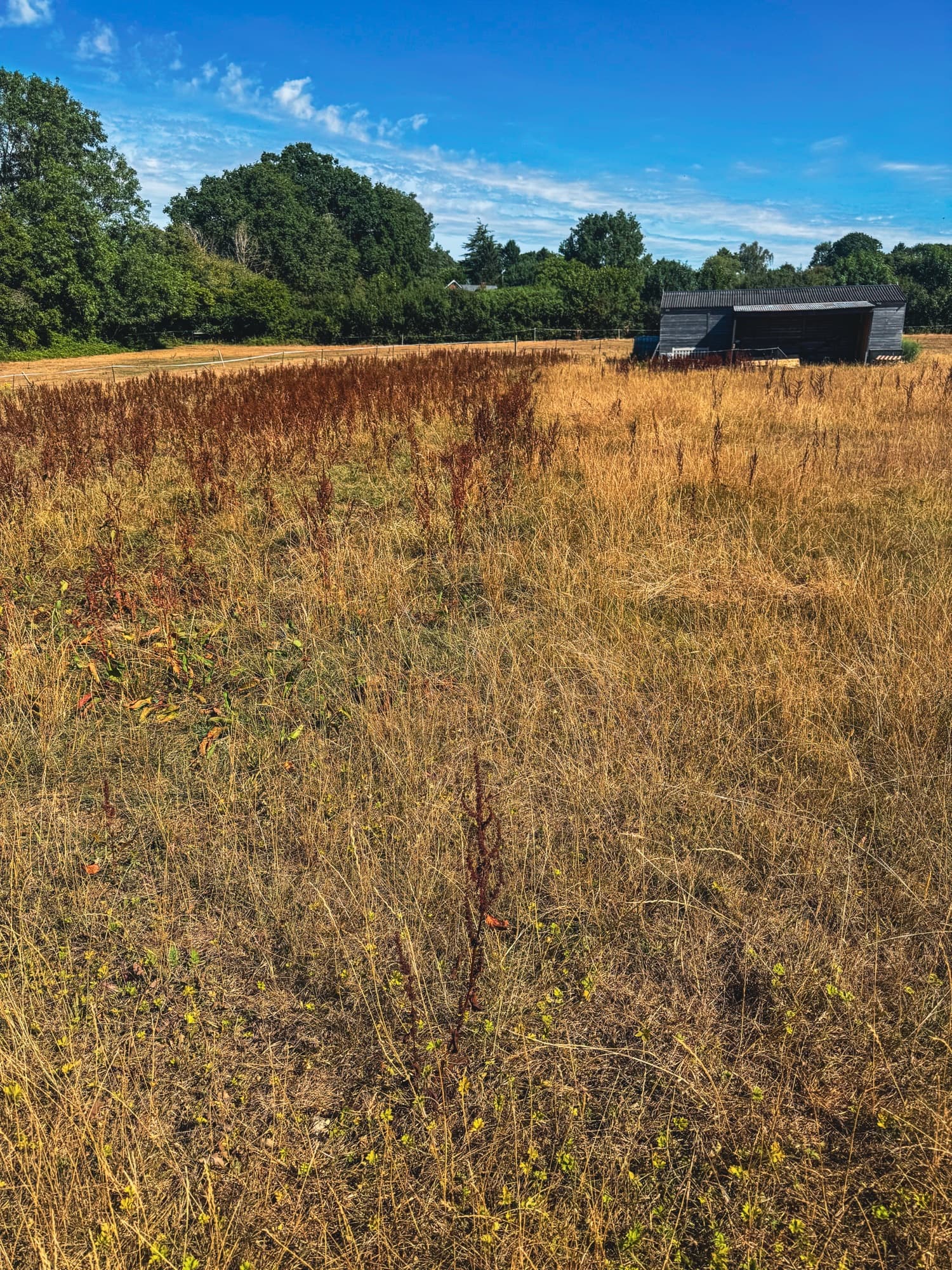
One of the biggest hidden problems in horse paddocks and grazing land is soil compaction. On the surface a field may just look tired, patchy, or overgrazed, but underneath the grass there is often a much bigger issue developing. Years of machinery traffic, heavy horses, livestock pressure, and constant human movement gradually compress the soil until the ground becomes extremely hard and dense.
When this happens, grass roots physically cannot penetrate the soil properly. Once compaction levels reach around 300psi, root growth becomes severely restricted. Healthy grass ideally needs root systems reaching between 4 and 8 inches deep to establish properly, access moisture, absorb nutrients, and withstand grazing pressure.
If those roots cannot reach depth, the consequences quickly become visible above ground.
Grass struggles to grow to height, recovery after grazing becomes extremely slow, and the field begins thinning out. Once grass coverage weakens, weeds rapidly move in to take advantage of the exposed ground. This is why heavily compacted paddocks often become dominated by weeds, moss, bare patches, and poor-quality grazing.
At Paddock maintenance we regularly see paddocks where the underlying issue is not the seed, fertiliser, or weather. The real problem is the hard pan sitting underneath the surface.
So how do you fix it properly?
The first stage is subsoiling.
A subsoiler is used to penetrate deep into the ground and physically crack apart the compacted hard pan beneath the surface. Unlike rotavating alone, which only works the upper layer of soil, subsoiling targets the deeper compaction that is restricting root growth. The machine lifts and fractures the soil profile without fully turning it over, creating channels that allow air, moisture, and roots to move downward again.
Once the field has been subsoiled, it is extremely important to allow time for the weather to do its job. Rainwater penetrates into the cracks created by the subsoiler, helping soften and naturally break down the compacted layers further. Leaving the field for a few weeks during this stage often dramatically improves the final result.
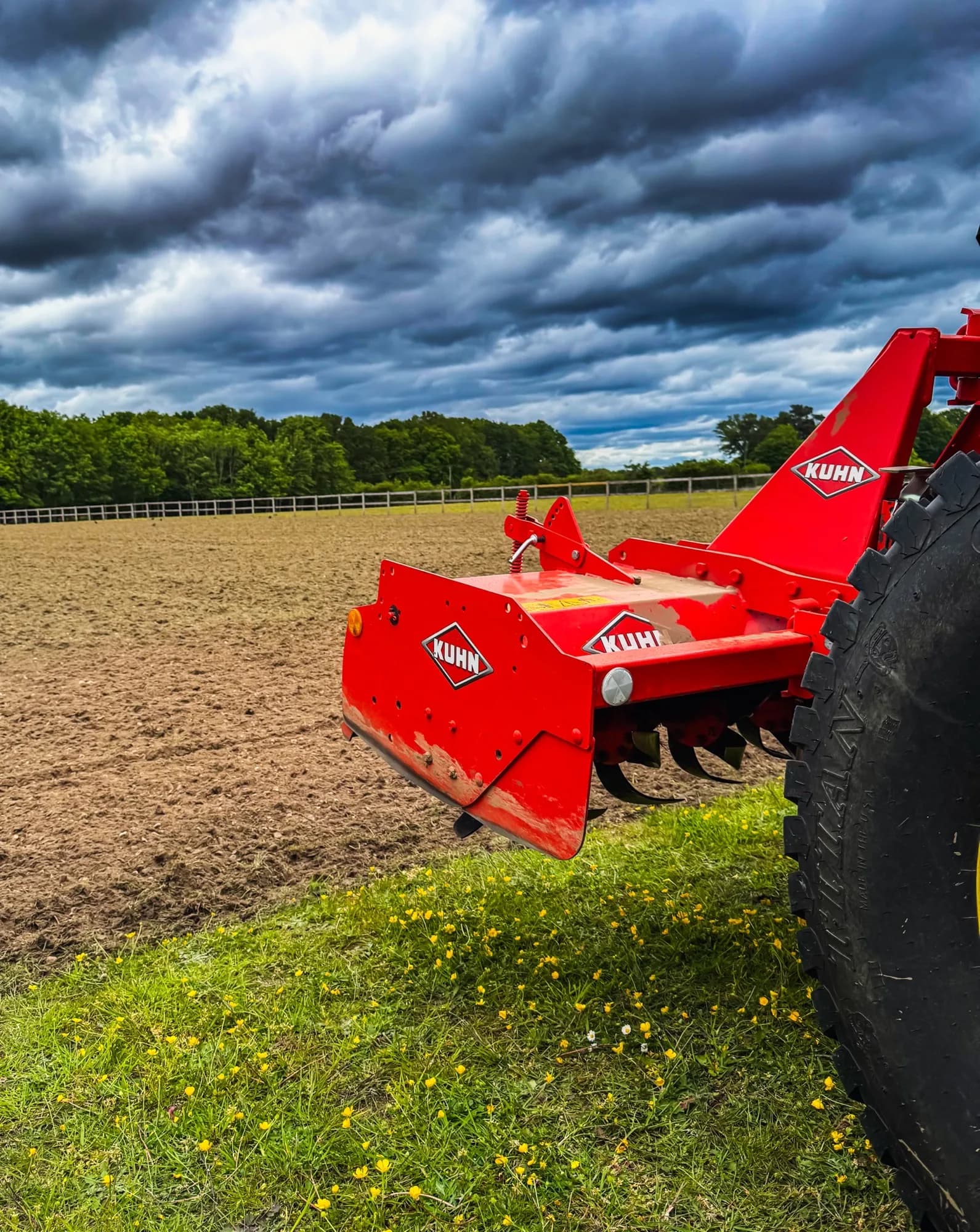
After the hard pan has started breaking down properly, the next stage is rotavating.
Rotavating creates a fine seed bed by breaking up the upper surface layer and preparing the soil for reseeding. Once the surface has been cultivated, the field is rolled flat to improve seed-to-soil contact and create a smoother finish.
Finally, a dimple seeder is used to reseed the paddock evenly and accurately. This method places seed at the correct depth while improving germination rates compared to simple broadcasting methods.
The end result is a paddock with significantly improved drainage, healthier root systems, stronger grass establishment, and much fuller grazing coverage. Once roots are finally able to penetrate properly into the soil profile again, grass growth improves dramatically and the field becomes far more resilient to grazing pressure and seasonal stress.
If your paddocks are struggling year after year despite reseeding, fertilising, or resting them, the real problem may be underneath the surface. Soil compaction is one of the most common causes of poor grass growth, and until it is addressed properly, the field will continue fighting against itself.
Update: for ground too hard for conventional kit, we now build an indexable carbide-tipped mole plough — a replaceable carbide cutting tip instead of a blunt steel edge, designed specifically for breaking severely compacted ground like the paddocks this post describes.
If the compaction goes deeper than a harrow or aerator will reach, mole ploughing is the next step — it fractures the pan and drains it in one pass.