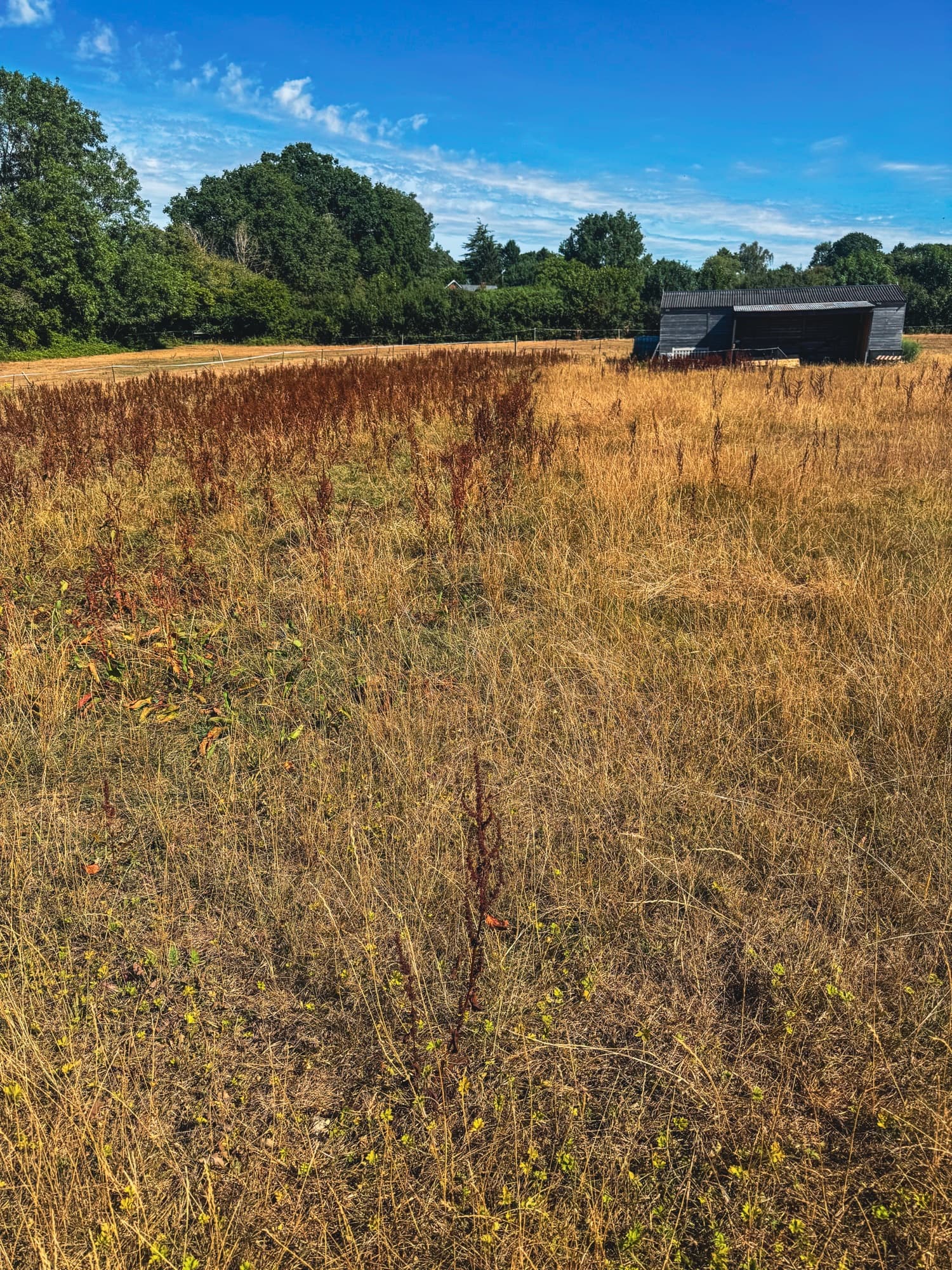
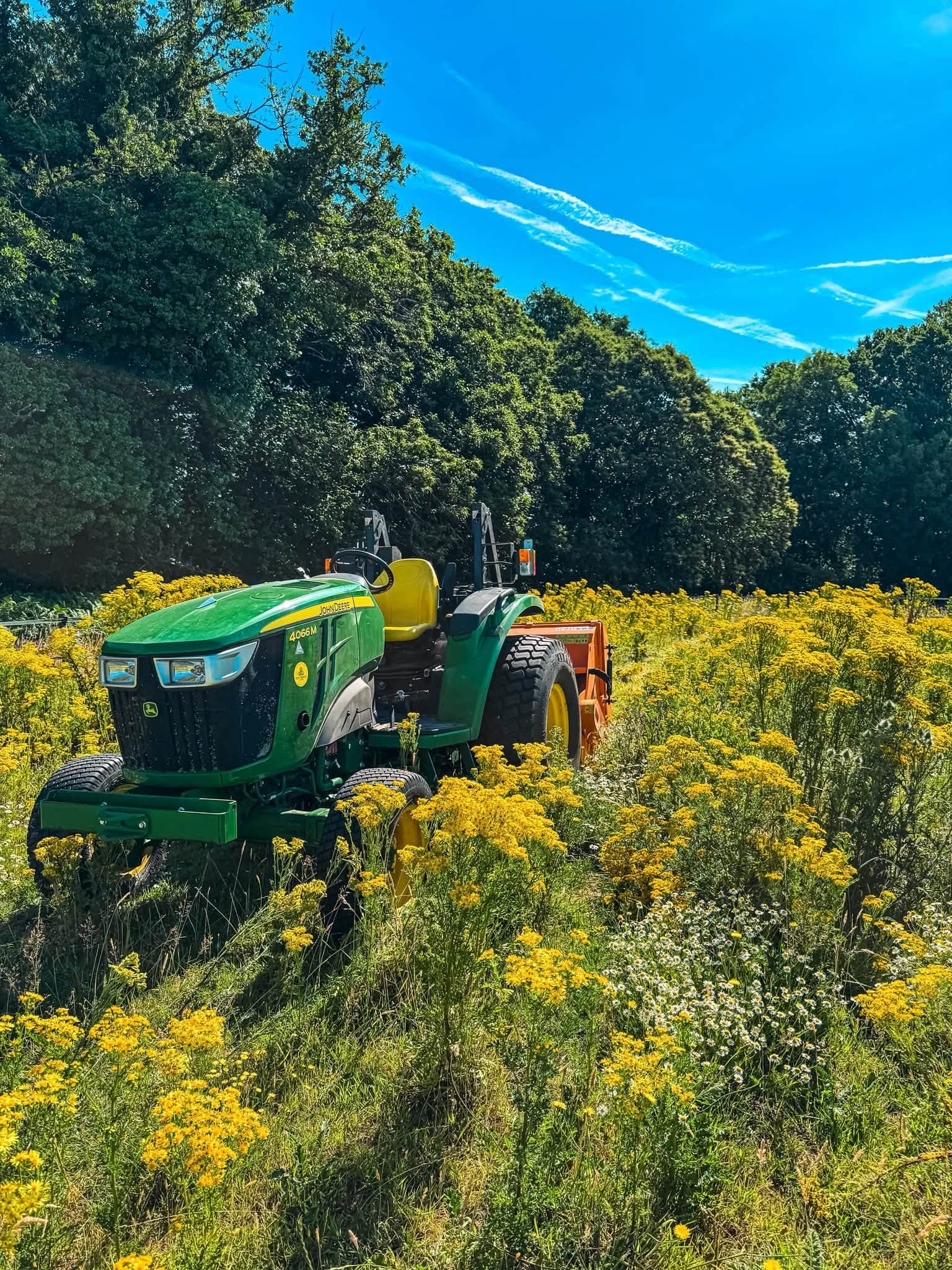
For anyone involved in paddock management, spraying is never something to be taken lightly. Whether you are controlling ragwort, docks, nettles, buttercups or invasive weeds, you are applying chemicals into an environment where horses and livestock live, graze and feed. Done correctly, herbicide spraying is safe and extremely effective. Done badly, it can create unnecessary risk to animals, neighbouring land and the wider environment.
At Hampshire Paddock Management we take that responsibility seriously, which is why the choice of spraying equipment matters just as much as the chemical itself.
One of the most important decisions when spraying paddocks is nozzle selection. Many people outside agriculture have never heard of spray nozzles, yet they play a major role in how safely and accurately herbicides are applied.
Traditional flat fan nozzles are widely used throughout agriculture and grounds maintenance. As the name suggests, they create a flat fan-shaped spray pattern designed to give even coverage across the target area. They can be extremely effective and produce very good coverage on weeds and foliage. However, standard flat fan nozzles often create finer droplets. These smaller droplets are much more prone to spray drift, especially when there is wind, thermal lift or even minor air movement across open paddocks.
Spray drift is one of the biggest risks when applying herbicides. Fine droplets can travel beyond the intended target area and potentially move into neighbouring fields, hedgerows, gardens or grazing land. In livestock environments this is something that simply cannot be ignored.
This is why we choose to use air inclusion nozzles for much of our paddock spraying work.
Air inclusion nozzles, sometimes referred to as low drift or venturi nozzles, work by drawing air into the spray stream before the liquid leaves the nozzle. The result is a larger, heavier droplet containing tiny air bubbles. You can think of it in a similar way to modern household taps that aerate water flow.
The advantage of these larger droplets is simple. They fall to the ground faster and are far less susceptible to drift. This dramatically reduces the risk of herbicide moving off target and helps ensure the chemical stays exactly where it is intended to be.
For paddock spraying this matters enormously. Reduced drift means reduced risk to horses, livestock, neighbouring grazing land, wildlife habitats and watercourses. It also means better application accuracy and less wasted product.
Many people assume spraying is simply a case of filling a tank and driving across a field. Professional paddock spraying is far more technical than that. Weather conditions, wind speed, humidity, nozzle type, pressure, water volume and forward speed all have to be considered carefully before a single drop is applied.
Even with air inclusion nozzles, spraying should never be carried out in unsuitable conditions. Excessive wind, high temperatures or strong thermal activity can still increase drift risk. Responsible operators monitor conditions constantly and stop spraying if conditions become unsafe.
Correct calibration is equally important. Applying too much chemical can damage grassland and increase environmental risk. Applying too little can reduce effectiveness and encourage weed regrowth. Professional spraying is about precision, consistency and safety.
For horse paddocks in particular, careful spraying can significantly improve grazing quality by removing toxic or invasive weeds before they spread further. Weeds such as ragwort are not only undesirable but potentially dangerous to livestock if consumed. Effective control helps maintain healthier, safer pasture over the long term.
Ultimately, professional paddock spraying is about risk reduction at every stage. From the chemicals selected, to the equipment used, to the timing of the application itself, every decision matters. Using air inclusion nozzles is one of the many steps we take to minimise drift, improve safety and protect the land we work on.
When you are managing grazing land, there is no room for shortcuts. The goal is not simply to kill weeds. The goal is to do it safely, responsibly and professionally while protecting livestock, neighbouring land and the environment around us.