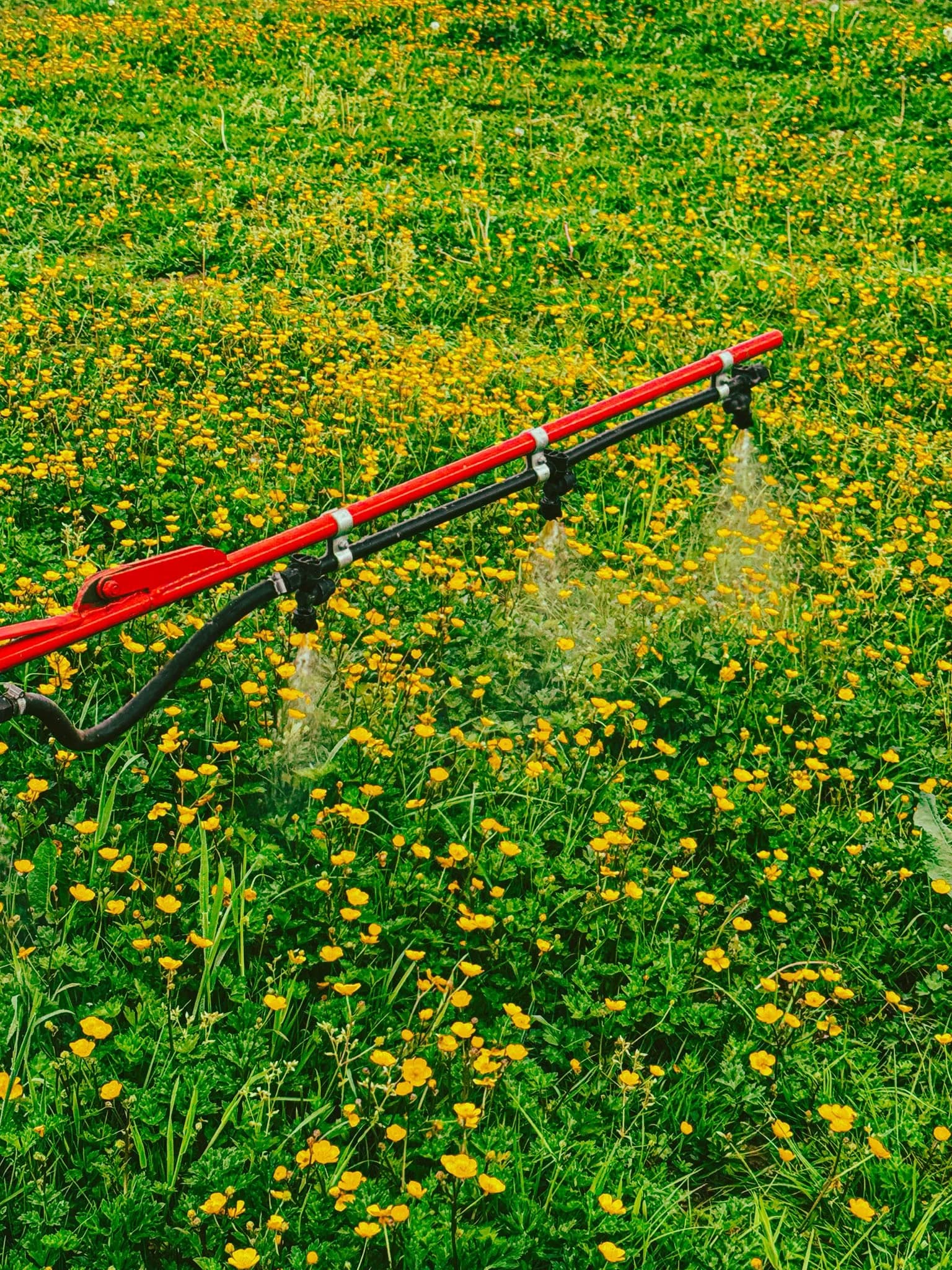
Buttercups might look harmless when they flower across a paddock in spring, but for horse owners they are often a warning sign that grazing quality is deteriorating. Heavy infestations of creeping buttercup and meadow buttercup can quickly outcompete productive grasses, reduce grazing value, and create long term pasture management problems if left untreated.
One of the most effective herbicides currently used for buttercup control in horse paddocks is Envy Herbicide. When used correctly, it provides highly effective control of buttercups while helping restore healthier grass growth throughout the field.
Why Buttercups Become a Problem
Buttercups thrive in conditions where grass is weak or stressed. Poor drainage, compacted ground, overgrazing, acidic soil, and lack of fertilisation all create the ideal environment for them to spread aggressively.
In horse paddocks this often becomes a cycle:
- Horses overgraze desirable grasses
- Bare patches appear
- Buttercups colonise the weak areas
- Grass struggles even further
- The infestation expands year after year
While fresh buttercups are generally avoided by horses because of their bitter taste, they still reduce usable grazing and indicate underlying pasture issues that need addressing.
What Is Envy Herbicide?
Envy Herbicide is a selective herbicide commonly used in grassland and paddock management for controlling broadleaf weeds such as:
- Buttercups
- Daisies
- Dandelions
- Plantains
- Chickweed
- Thistles
It is particularly valued because it targets broadleaf weeds while leaving established grasses largely unaffected when applied correctly.
For horse paddock owners, this makes it a practical solution for reclaiming heavily infested grazing land without needing to completely reseed the field.
When to Spray Buttercups
Timing is critical when using Envy.
The best results are usually achieved when buttercups are actively growing during spring, typically between April and early June depending on weather conditions. Younger plants are easier to kill than mature flowering plants.
Ideally you should spray:
- During mild temperatures
- In dry weather
- When rain is not expected for several hours
- When grass and weeds are actively growing
Avoid spraying during drought conditions, frosty periods, or when weeds are stressed, as herbicide uptake becomes far less effective.
Preparing the Paddock Before Spraying
Before applying any herbicide, paddocks should be managed correctly to maximise effectiveness.
Reduce Grass Height
If the paddock is heavily overgrown, topping or mowing beforehand can improve spray coverage. However, allow enough regrowth for weeds to produce healthy leaf surface area before spraying.
Remove Horses
Horses must be removed from the paddock before treatment. Always follow the product label regarding exclusion periods before allowing animals back onto treated grazing.
Check Weather Conditions
Wind drift can damage nearby plants, hedges, or gardens. Choose calm weather conditions with minimal wind.
How Envy Works on Buttercups
Envy Herbicide works systemically. Once absorbed through the leaves, it moves throughout the plant disrupting growth processes internally.
Visible effects often include:
- Twisting or curling leaves
- Yellowing
- Wilting
- Progressive dieback over several weeks
Buttercups can take time to fully collapse, particularly mature infestations, so patience is important. Results are not usually instant.
What Happens After Spraying
Many paddock owners expect fields to immediately look perfect after spraying, but pasture recovery takes time.
Once buttercups die off, bare areas may remain where grass had already been weakened. This is why spraying should be combined with broader paddock management practices such as:
- Aeration
- Harrowing
- Overseeding
- Fertilisation
- Rotational grazing
- Improving drainage
Without correcting the underlying cause, buttercups often return within a season or two.
Common Mistakes When Using Envy
Spraying Too Late
Large mature flowering buttercups are harder to control. Earlier applications usually give better long term results.
Poor Coverage
Spotty application leaves surviving weeds which rapidly recolonise the paddock.
Ignoring Soil Health
Herbicides remove symptoms, not causes. Compacted or nutrient deficient paddocks will continue to struggle.
Returning Horses Too Soon
Always follow label instructions carefully regarding grazing intervals and safety requirements.
Is One Application Enough?
Light infestations may clear with a single treatment, but badly neglected paddocks sometimes require follow up management the following year.
The key is combining weed control with grass recovery. Strong dense grass is ultimately the best long term defence against buttercups returning.
Final Thoughts
Envy Herbicide can be an extremely effective tool for reclaiming horse paddocks overwhelmed with buttercups, but successful pasture management goes far beyond simply spraying weeds.
Healthy grazing comes from balancing weed control with soil health, drainage, rotational grazing, and grass maintenance. When these factors work together, paddocks become more productive, safer for horses, and far more resilient against future weed invasions.