A well-maintained paddock doesn't happen by accident. While many horse owners focus on weed control and fertilising, one of the most effective maintenance tasks is often overlooked—harrowing.
When carried out at the right time of year and in the correct conditions, paddock harrowing improves grass growth, levels uneven ground, removes dead vegetation and prepares the field for overseeding. It is a simple operation that can dramatically improve both the appearance and productivity of horse paddocks.
Whether you manage a single grazing paddock or a large equestrian facility, understanding when and how to harrow can make a significant difference to pasture quality.
What Is Paddock Harrowing?
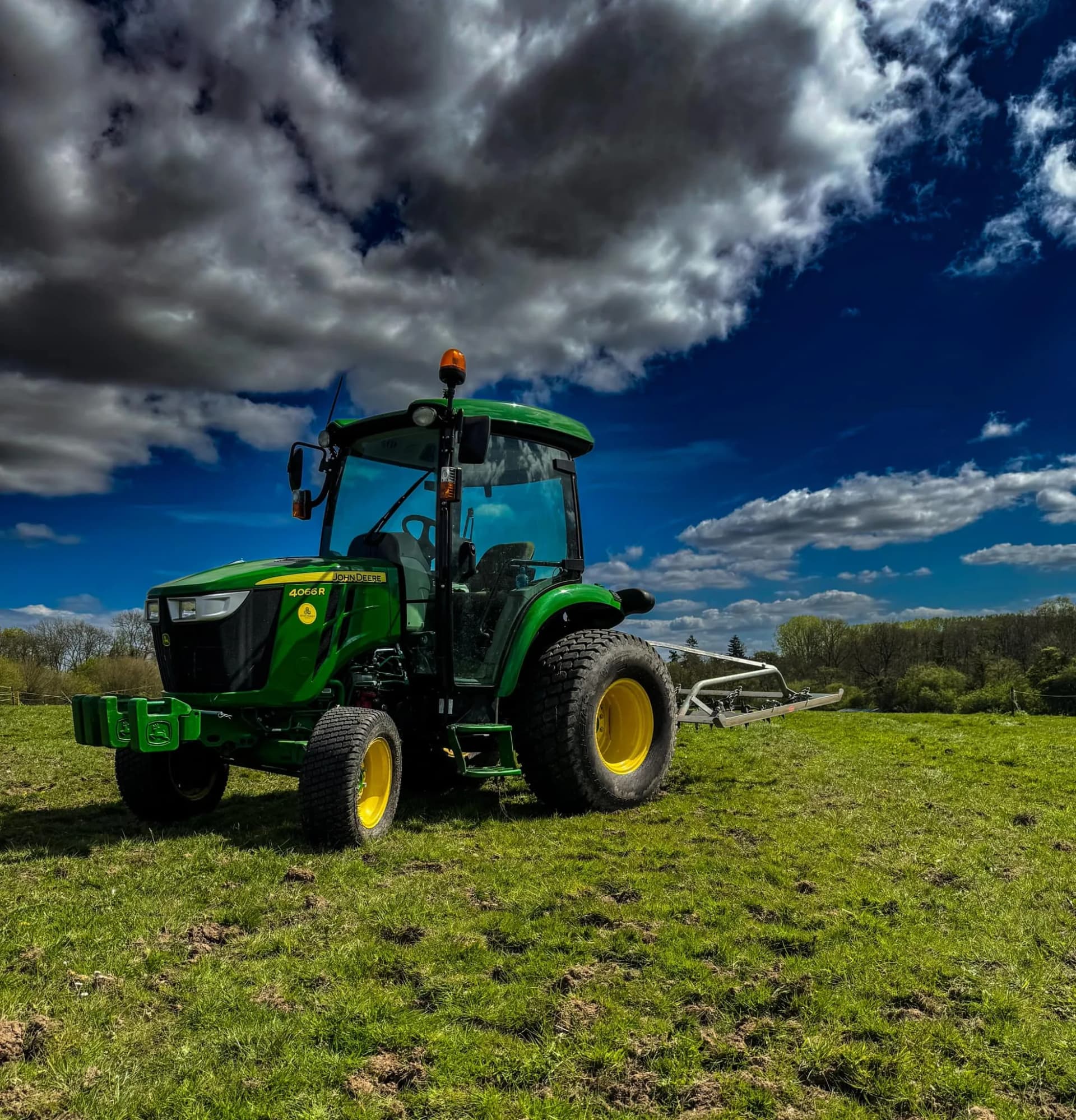
Harrowing involves towing a chain harrow or tine harrow across the surface of a field using a tractor, ATV or compact tractor.
Rather than cultivating the soil deeply, the harrow works across the surface to:
- Remove dead grass and thatch
- Pull out moss
- Break up surface compaction
- Level molehills and hoof damage
- Improve air circulation around the grass plants
- Create an ideal seedbed for overseeding
- Spread loose organic material
The result is healthier grass with better access to sunlight, nutrients, air and water.
Why Horse Paddocks Need Harrowing
Horse grazing is much tougher on grass than cattle or sheep grazing.
Horses repeatedly graze the same patches, create heavily compacted gateways and churn up wet ground during winter. Over time this leads to:
- Bare patches
- Dead grass
- Thick layers of thatch
- Poor drainage
- Uneven ground
- Reduced grass growth
Without regular maintenance, weeds begin to replace productive grass species, reducing the quality of grazing available.
Harrowing helps reverse many of these problems by removing dead material and encouraging fresh growth. It also improves soil aeration and water infiltration, helping grass recover more quickly after winter damage.
The Benefits of Harrowing
1. Removes Dead Grass
Throughout autumn and winter, dead grass builds up across the field.
This layer blocks sunlight from reaching new shoots and traps moisture around the surface.
A chain harrow lifts this material away, allowing fresh grass to emerge much more easily.
2. Encourages Stronger Grass Growth
Healthy grass needs:
- Air
- Sunlight
- Water
- Nutrients
Removing surface debris allows all four to reach the growing plant more effectively, leading to thicker, healthier swards.
3. Levels Uneven Ground
Winter often leaves behind:
- Molehills
- Hoof prints
- Small ruts
- Soil clumps
Harrowing helps redistribute this loose soil, producing a smoother paddock that's safer for horses and easier to mow.
4. Improves Overseeding Success
One of the best times to overseed is immediately after harrowing.
The harrow scratches the soil surface, creating thousands of tiny pockets where grass seed can settle.
This dramatically improves seed-to-soil contact compared to broadcasting seed onto untouched ground.
For the best results:
- Harrow
- Overseed
- Roll
- Fertilise
- Rest the paddock
5. Helps Improve Water Penetration
Although harrowing isn't a replacement for aeration or subsoiling, it does loosen the soil surface and improve water movement into the upper root zone.
This is particularly useful after light winter compaction.
If penetrometer readings exceed around 300 psi, deeper mechanical compaction relief such as subsoiling is usually required rather than relying on harrowing alone.
When Should You Harrow a Horse Paddock?
Timing is everything.
Early Spring
Spring is generally the best time because:
- The ground has begun drying out.
- Grass is starting active growth.
- Fields can recover quickly.
This is the perfect opportunity to:
- Remove winter debris
- Overseed
- Apply fertiliser
- Repair poaching damage
Autumn
Autumn harrowing can also be beneficial after the summer grazing season.
It prepares paddocks for autumn overseeding and helps remove accumulated dead material before winter.
Avoid Harrowing When
Do not harrow if:
- The soil is waterlogged.
- Frost is present.
- Heavy rain is expected.
- The field is extremely dry and dusty.
Working wet ground can create more compaction than it removes.
Should You Harrow Horse Manure?
This is probably the most debated subject in paddock management.
Traditionally, harrowing was used to spread manure across the field so nutrients could be recycled.
However, modern parasite management has changed this advice.
If horses return to the paddock too soon after manure has been spread, worm larvae can be distributed over a much larger area, increasing the risk of reinfection—especially in the UK's generally cool, damp climate. Regular poo-picking remains the preferred method for paddocks in active use. Harrowing manure is safest where the field can then be rested for an extended period under suitable weather conditions.
For many horse paddocks, it's better to:
- Regularly poo pick
- Compost manure separately
- Use harrowing primarily to remove dead grass and level the surface
Equipment Used for Paddock Harrowing
Depending on paddock size, you can use:
- Chain harrows
- Spring tine harrows
- Mounted harrows
- ATV harrows
- Compact tractor harrows
Small paddocks can often be maintained with an ATV and chain harrow, while larger equestrian facilities typically use compact or agricultural tractors.
Harrowing Is Just One Part of Good Paddock Management
The healthiest paddocks usually follow a complete maintenance programme including:
- Soil testing
- Weed control
- Harrowing
- Overseeding
- Fertilising
- Rolling where appropriate
- Aeration or subsoiling if required
- Rotational grazing
- Regular poo picking
Each task complements the others, resulting in stronger grass, fewer weeds and better year-round grazing.
Common Mistakes to Avoid
Many paddock owners accidentally reduce the effectiveness of harrowing by:
- Harrowing saturated ground
- Harrowing during prolonged drought
- Overseeding without rolling afterwards
- Skipping soil testing
- Ignoring underlying compaction
- Allowing horses back onto newly seeded paddocks too early
- Relying on harrowing instead of removing manure in frequently grazed horse paddocks
Avoiding these mistakes can significantly improve pasture recovery and long-term grass quality.
Final Thoughts
Paddock harrowing is one of the simplest yet most effective ways to improve horse grazing. By removing dead material, encouraging healthy grass growth, levelling uneven ground and preparing the soil for overseeding, harrowing forms an essential part of any paddock maintenance programme.
When combined with soil testing, fertilisation, weed control and good grazing management, it helps produce thicker, healthier grass that supports horses throughout the year while reducing long-term maintenance costs.
Rather than viewing harrowing as a once-a-year task, consider it one important step within a wider pasture management strategy. With the right timing and equipment, it can transform tired, worn paddocks into productive, resilient grazing that benefits both horses and land alike.
Not sure whether your paddock needs harrowing yet? This post covers why harrowing matters and what it gives you; for the diagnosis side — matted thatch, thin patches, dung building up and the rest — read the signs your paddock needs harrowing. When you want it done rather than done yourself, our paddock harrowing service covers Hampshire and the surrounding counties.