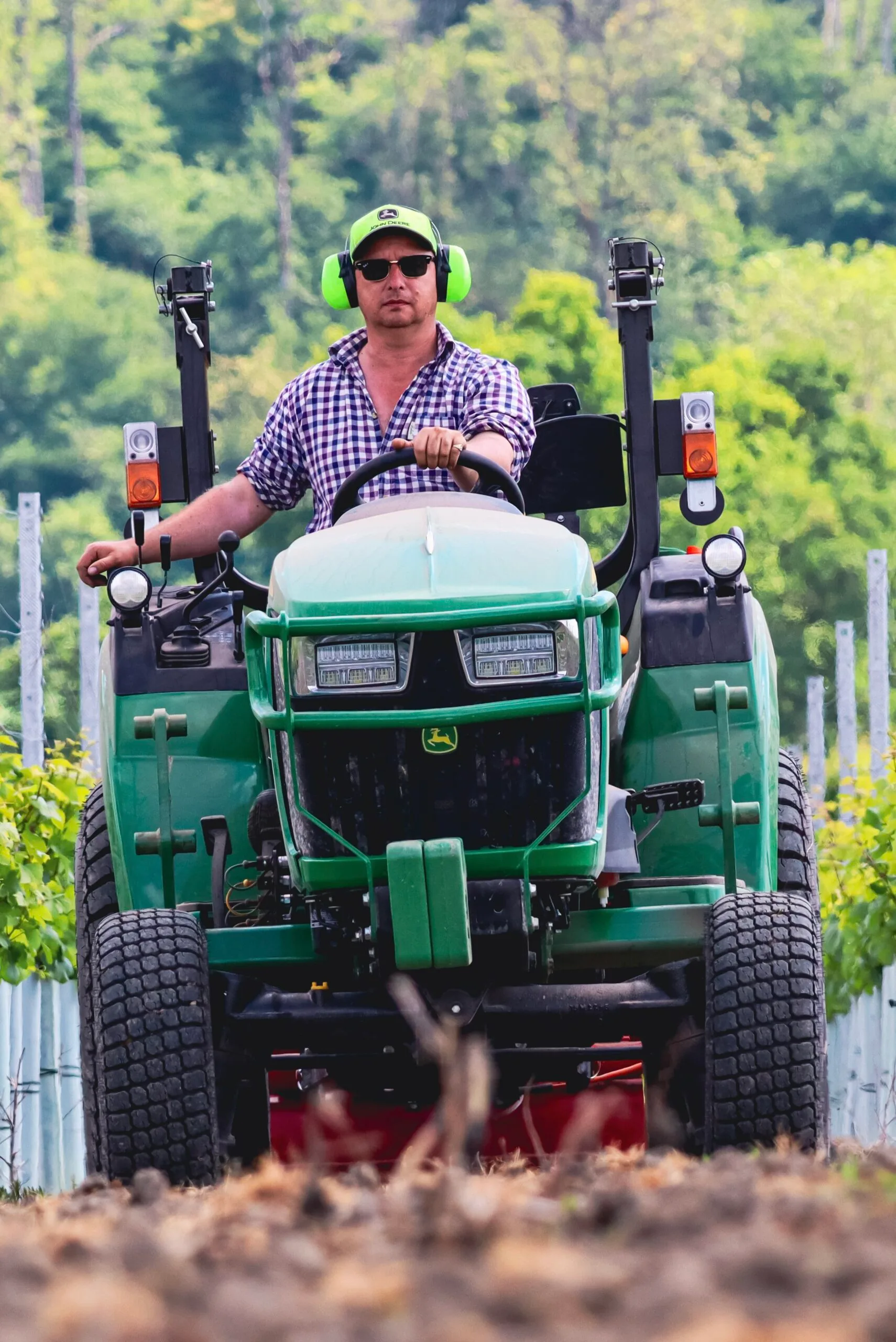
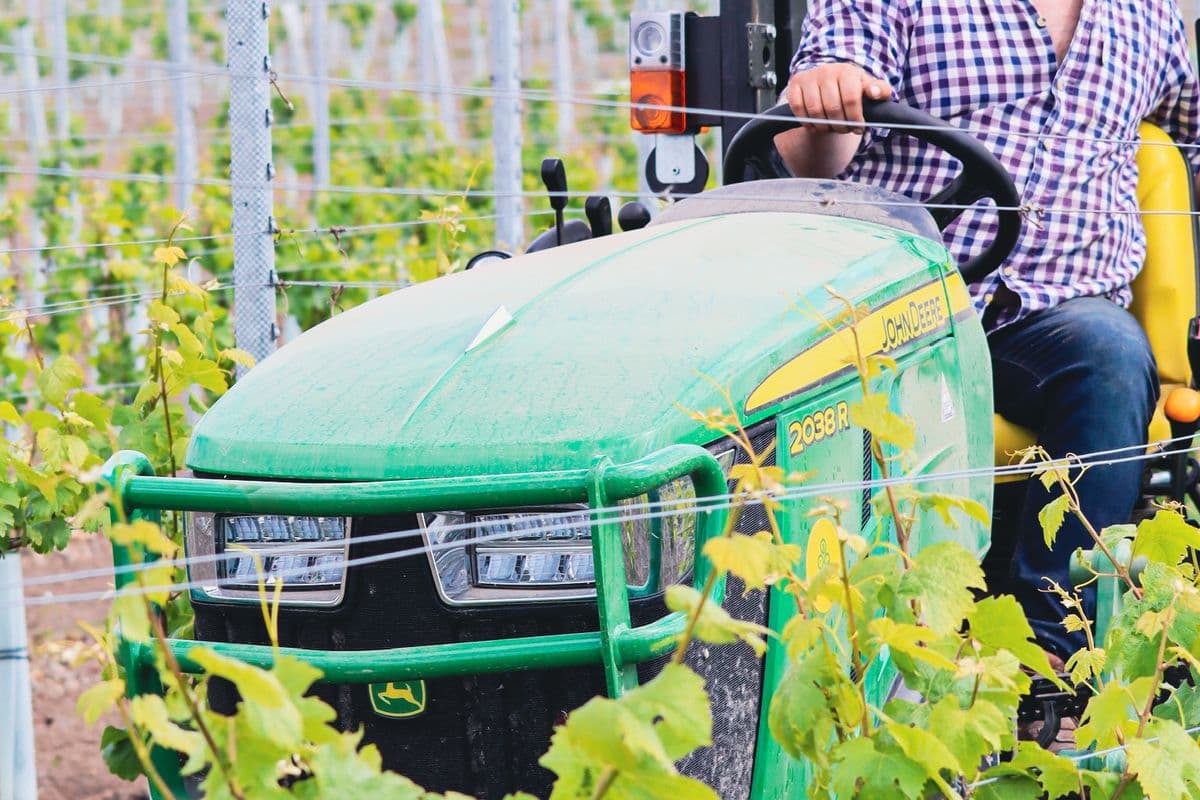
Vineyard work throws up a challenge most field machinery isn't built for: the rows are narrow, the headlands are tight, and whatever you bring in has to work cleanly between established vines without churning up the alleys or catching a trellis. When it came to finishing off the rows at the vineyard on the Burcombe Estate, near Salisbury, that meant reaching for a smaller, more nimble setup than a full-size tractor — a sub-compact John Deere 2038R paired with a Winton stone burier seeder.
The goal was a clean, level, sown finish in the strips between the vines: broken-up soil, stones and clods buried out of the way, and a fresh seedbed sown and firmed — all in a single pass. Here's how the combination handled it.
One pass: rotavating, stone burying and seeding together
The Winton stone burier seeder does three jobs at once. A powered rotor first rotavates the top few inches of soil, breaking up the surface and any compaction left from earlier cultivation. The same rotor then throws the heavier material — stones, clods and trash — down to the bottom, burying it beneath a fine, even tilth. A seeder drops grass or cover-crop seed onto that prepared surface, and a rear packer roller firms it in. What would otherwise be three or four separate jobs — rotavating, raking off stones, sowing and rolling — becomes one run down the row.
Doing it in a single pass matters in a vineyard. Every extra pass is another trip down a narrow alley, another chance to compact the soil or knock a vine, and more time the ground sits open and bare. Combining the operations means the strip goes from rough, stony cultivation to a firmed, sown seedbed before you reach the headland.
Why a sub-compact tractor earns its place
The reason this works is the tractor underneath it. A sub-compact like the John Deere 2038R is small and light enough to move easily between vine rows and turn on tight headlands, but it still has the hydraulics and PTO to drive a stone burier seeder properly. A bigger machine simply wouldn't fit the rows cleanly, and its weight would do more harm than good on freshly worked ground.
It's a good example of matching the machine to the job rather than the other way round. The same compact setup that suits paddocks, smallholdings and amenity ground is just as at home finishing vineyard rows — precise, low-impact, and still able to carry a proper implement.
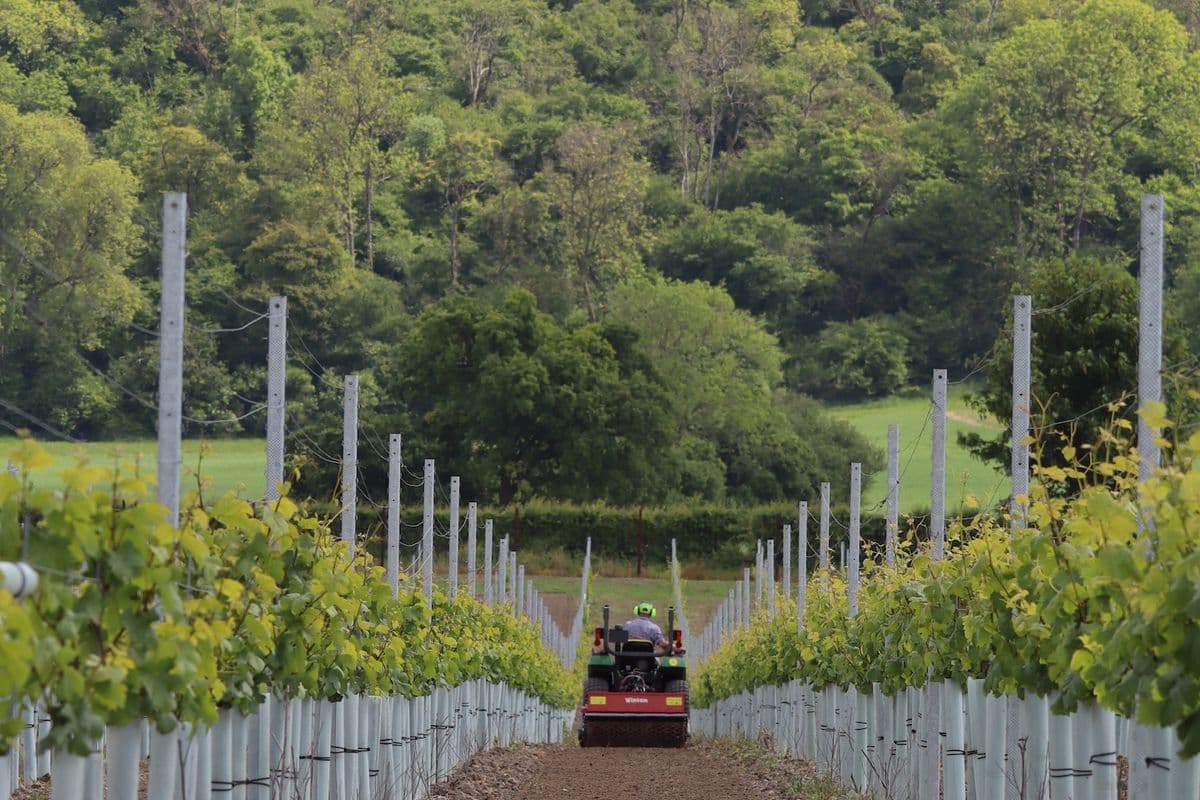
The finish
The result was exactly what vineyard establishment needs: the inter-row strips rotavated, destoned and sown in one tidy operation, ready to green up and stabilise the soil between the vines. A clean finish, minimal ground disturbance, and far fewer passes than the traditional approach.
If you've got vineyard rows, paddocks or amenity ground that need rotavating, stone burying and seeding — anywhere around Hampshire, Wiltshire and the surrounding counties — get in touch and we'll talk through the right approach.
The same stone burier and seeder combination is what we use on rough paddocks and new ground — see stone burying for how it works on a bigger area.